
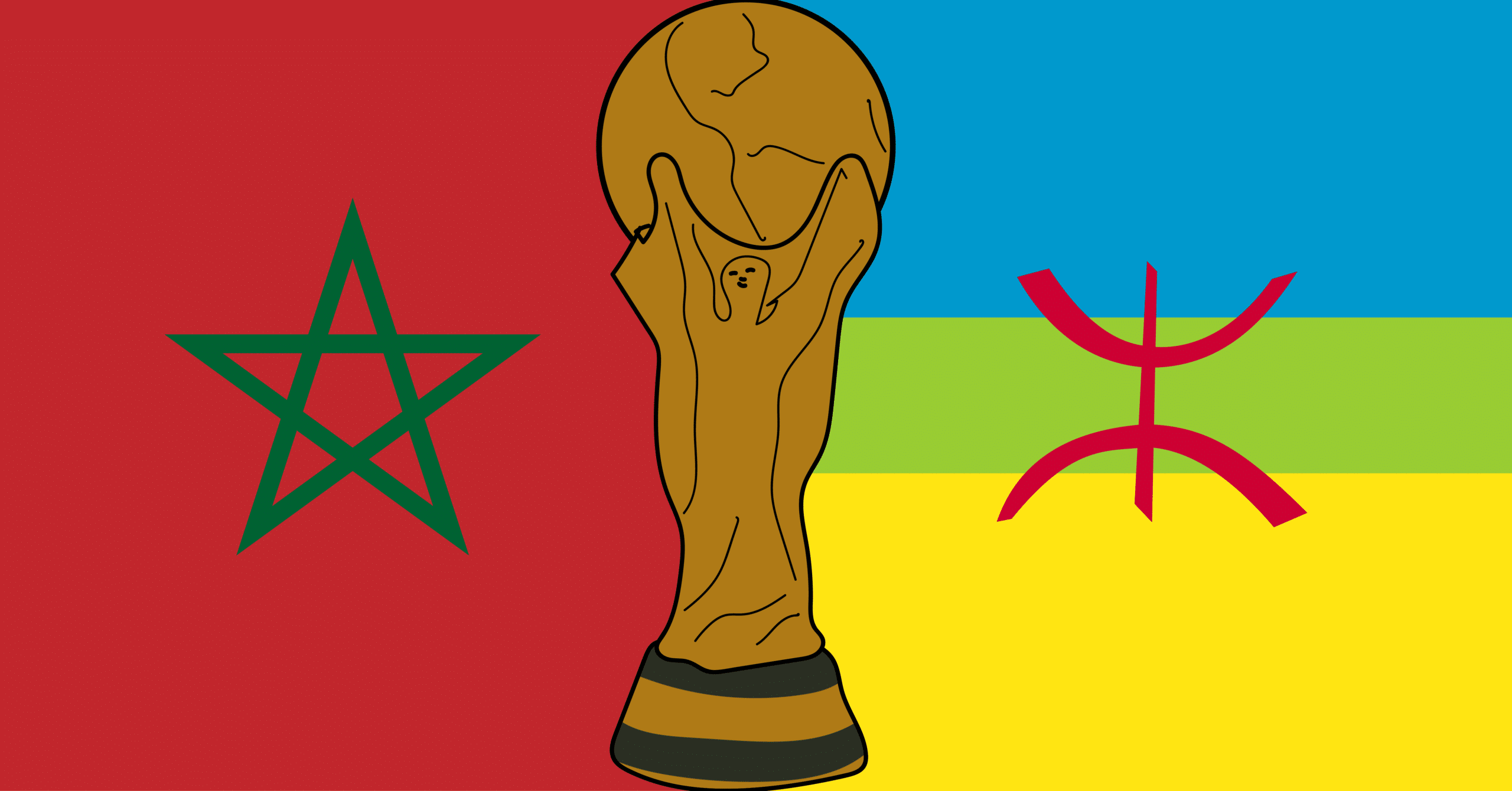
Morocco’s national football team is entering the 2026 World Cup with a different kind of pressure. After the Atlas Lions became the first African to reach a World Cup semifinal in 2022, the team is no longer being treated as a surprise story. It is now being watched as a football power with a wider cultural meaning.
A June 12 profile in The New Yorker frames Morocco’s team as a symbol that travels across borders: African, Arab, Muslim, diaspora and Global South at once. For Amazigh readers, one of the most important parts of that story is that Morocco’s layered identity was visible on the world stage. The article notes that players displayed the Amazigh flag during the 2022 celebrations, placing Indigenous North African identity beside other forms of solidarity and belonging.
That symbolism matters because Morocco’s football identity is often discussed through simplified labels. The country is regularly described as Arab, African or Muslim, but the national team’s rise has also reminded international audiences that Morocco’s cultural reality is more complex. Amazigh heritage is not a side note to that story. It is the main root through which millions of Moroccans understand language, family, land and public memory.
The 2026 squad also reflects the Moroccan diaspora. Many of the team’s players grew up in Europe and learned football in elite club systems before choosing Morocco internationally. The New Yorker reports that the current team includes a large number of foreign-born players and is led by coach Mohamed Ouahbi, who was born in Belgium to Moroccan parents from the Amazigh Rif region. That diaspora makeup has helped the team become a meeting point for Moroccans abroad, including communities in Europe and North America.
Football is also a space where Moroccans express social feeling. The New Yorker article describes stadium culture as more than entertainment, pointing to chants that speak about injustice, migration and public frustration. In that sense, the Atlas Lions are not only a sports story. They are part of a broader conversation about how Moroccans represent themselves when official language, public culture and identity are still contested.
For Amazigh World News, the World Cup moment is worth following because it shows how Amazigh identity appears internationally when Moroccan culture becomes highly visible. Whether through flags, fan celebrations, player backgrounds or diaspora gatherings, the Atlas Lions continue to carry a national story that cannot be reduced to one label.