
Amazigh Activists Reignite Debate Over the Name of the Arab Maghreb Union, a long-running debate over the name and symbolism of the Arab Maghreb Union, arguing that the regional bloc’s official identity never fully reflected the Amazigh depth of North Africa.
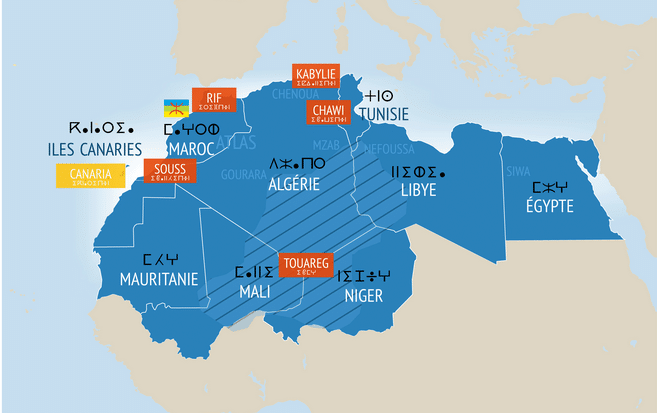
Writing in Achkayen, Mohamed Chkair questioned why leaders of Morocco, Algeria, Tunisia, Libya, and Mauritania adopted a label centered on Arab identity for a region whose societies also have deep Amazigh linguistic, cultural, and historical roots. The article points to Tarifit, Tachelhit, Tamazight, Kabyle, Tuareg, Nafusi, and other Amazigh communities as part of the region’s social fabric.
The commentary links the naming question to a broader critique of regional politics. The Arab Maghreb Union was founded in Marrakech in 1989, but its institutions have long been paralyzed by disputes among member states, especially Moroccan-Algerian tensions. In that context, the writer suggests that the name itself reflects an older political imagination that emphasized Arab unity while leaving Amazigh heritage at the margins.
The official history of the Union describes the Marrakech treaty as a project for cooperation among the five Maghreb states. Yet, for Amazigh activists and commentators, the continued use of “Arab Maghreb” remains contested because it can make Indigenous North African identity seem secondary in the very region where it is rooted.
The debate is not merely semantic. Across North Africa, language policy, school curricula, public signage, media representation, and cultural funding are shaped by how states define national and regional identity. The renewed discussion shows that, decades after the 1989 treaty, the words used to describe the Maghreb still carry political weight.