
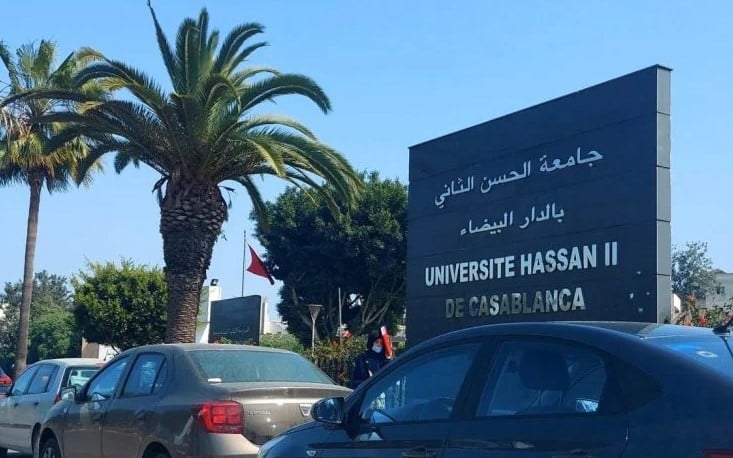
A recent academic paper published by researchers from Hassan II University of Casablanca has reignited serious concerns about institutional accountability and the persistent marginalization of Morocco’s indigenous language, Tamazight.
The paper, titled “Augmentation and Classification of Requests in Moroccan Dialect to Improve Quality of Public Service: A Comparative Study of Algorithms,” advances a deeply flawed linguistic claim that should alarm every Moroccan citizen. The authors assert that Tamazight (Amazigh/Berber) is merely a “sub-dialect” of Moroccan Arabic (Darija).
This assertion is not a minor academic imprecision. It is a fundamental linguistic error, conflating two entirely distinct branches of the Afro-Asiatic language family—Semitic (Arabic) and Amazigh (Berber)—and, more seriously, it constitutes a direct contradiction of Morocco’s constitutional framework.
A Constitutional Contradiction
Article 5 of the 2011 Moroccan Constitution explicitly recognizes Tamazight as an official language of the Kingdom, alongside Arabic. By relegating Tamazight to the status of a “sub-dialect”—a term normally reserved for regional variations within a single language—the authors effectively dismiss decades of political struggle, legal recognition, and constitutional reform.
What makes this misrepresentation particularly troubling is that the paper’s abstract itself opens with a reference to “Moroccan law.” That researchers affiliated with a major Moroccan public university could either be unaware of, or choose to ignore, such a foundational constitutional provision points to a deeper systemic failure in how Amazigh identity and language are treated—even within supposedly objective academic research.
A Selective Reading of Linguistic History
The paper’s problematic classification is further compounded by its selective account of Darija’s linguistic influences. The authors carefully note the presence of loanwords from French, Spanish, and Portuguese, yet conspicuously omit the most profound and structurally significant influence on Darija: Tamazight itself.
There is broad scholarly consensus that Tamazight has exerted a deep influence on Darija’s lexicon, phonology, syntax, and idiomatic structures. To emphasize peripheral colonial influences while ignoring the foundational Amazigh substrate is not merely an oversight—it reflects an intellectually indefensible hierarchy of influences that minimizes the indigenous roots of Moroccan speech.
Part of a Broader Pattern
Unfortunately, this incident is not isolated. It aligns with a troubling pattern of institutional marginalization. Just last year, the King Fahd School of Translation in Tangier classified Tamazight as a “foreign language” on its student application platform.
When multiple state-affiliated institutions—whether a leading university research team or a prestigious translation school—either deny Tamazight’s official status or treat it as external to Morocco, it suggests a systemic disregard for the country’s linguistic diversity and its own constitutional commitments.
Even when academic publications avoid overt constitutional violations, they frequently reproduce other serious inaccuracies. A recent paper jointly published by researchers from Chouaib Doukkali University and Purdue University, titled “Tachelhiyt-Darija: a Parallel Speech Corpus for Two Underrepresented Languages,” claims that “Moroccan Arabic and Tamazight are both descendants of the Semitic branch of the Afro-Asiatic language family.”
This statement is categorically false. Amazigh languages form a distinct and independent branch of the Afro-Asiatic family, only distantly related to Semitic languages such as Arabic. That such an error passed academic peer review raises serious questions about scholarly rigor and oversight.
Accountability Matters
If academic research is meant to inform public policy and public service, as the Hassan II University paper explicitly suggests, it must begin by respecting the linguistic facts and constitutional realities of the society it studies.
Universities, researchers, and peer-review mechanisms must be held accountable when they perpetuate misrepresentations that undermine Tamazight’s official status and erode the hard-won political and cultural recognition enshrined in Morocco’s Constitution.
This is not merely a linguistic debate. It is a question of constitutional fidelity, academic integrity, and respect for Morocco’s indigenous identity.
ⴰⵢⵢⵓⵣ ⵏⵏⴽ ⵎⴰⵙⵙ ⵎⵓⵃⵎⵎⴷ ⴰⵎⵖⵏⴰⵙ ✌️✨