
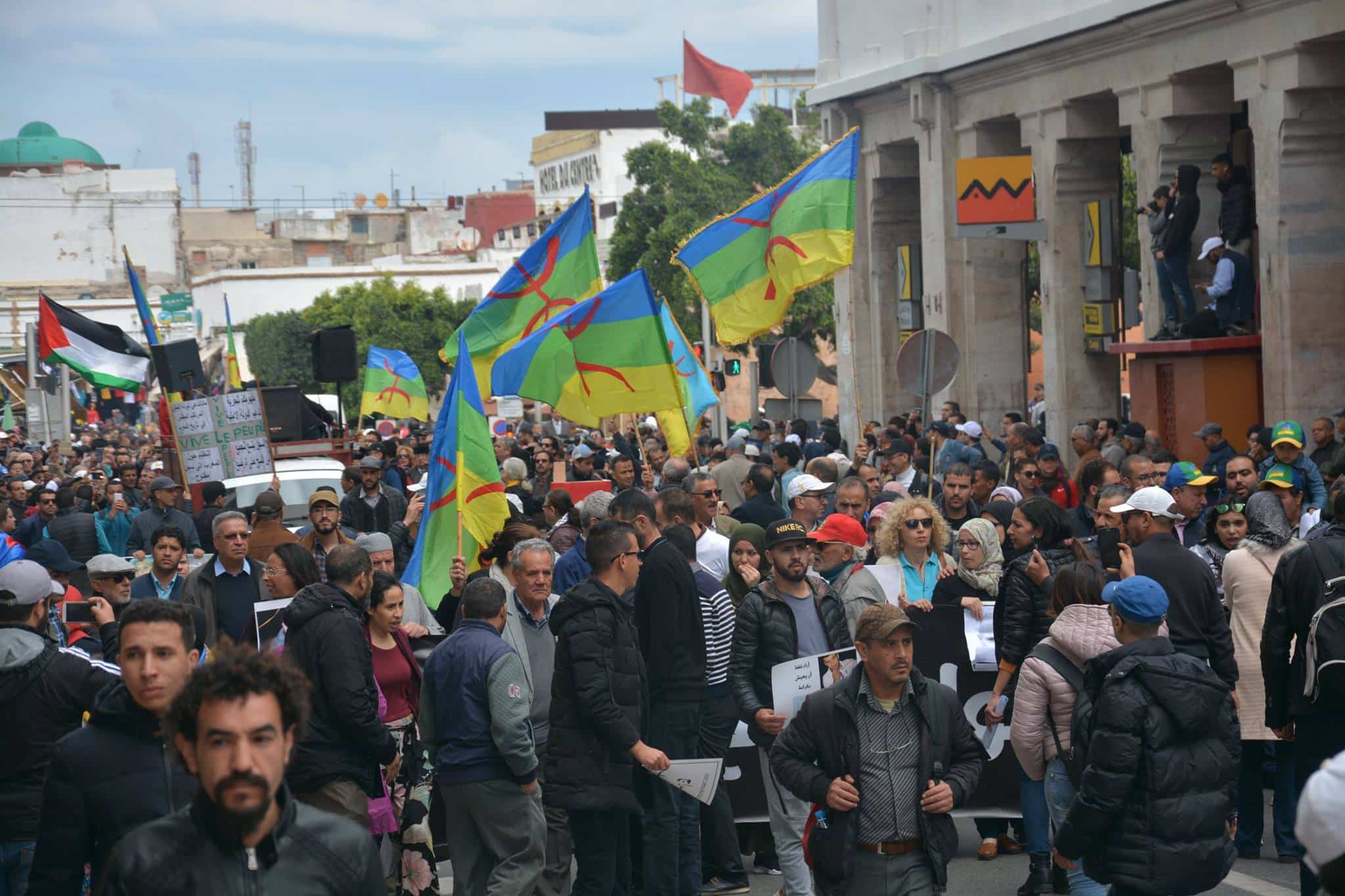
The International Work Group for Indigenous Affairs has used its 2026 Morocco chapter to argue that official recognition of Amazigh identity has not yet been matched by full implementation in public life.
The chapter, published on April 22 as part of The Indigenous World 2026, notes that Morocco’s 2011 Constitution recognizes Amazigh identity and Tamazight as an official language. Parliament also adopted Organic Law 26-16 in 2019 to set the process for integrating Tamazight into education, administration, public services and other priority sectors.
But IWGIA says the gap between recognition and application remains wide. More than a decade after constitutional recognition, the organization argues that Tamazight teaching is still limited, implementation has been slow, and Tifinagh visibility remains absent from key official documents such as national identity cards, passports and banknotes.
The report also highlights the contested question of the size of Morocco’s Amazigh-speaking population. It cites the 2024 census estimate that Tamazight speakers represent 24.8 percent of the population, while noting that Amazigh associations dispute that figure and argue the real proportion is much higher.
Land, language and political representation
Beyond language policy, IWGIA frames Amazigh rights as a broader issue of human security, land rights and political participation. The chapter points to disputes over collective land, resource exploitation and the principle of free, prior and informed consent, saying state-backed demarcations and development projects have often moved forward without explicit consent from affected Amazigh communities.
The report argues that changes to collective land management and privatization policies can weaken rural communities by fragmenting land control, reducing access to water and grazing areas, and accelerating migration from villages to cities or abroad.
IWGIA also revisits the case of the Amazigh Democratic Party, founded in 2005 and later dissolved after authorities ruled it violated laws barring parties based on ethnic, linguistic or regional criteria. The chapter presents the case as an example of institutional limits on political organization around Amazigh identity.
Recognition without full application
For Amazigh activists, the central issue remains the gap between recognition and application. The 2011 Constitution and the 2019 organic law created a formal framework for Tamazight, but IWGIA says implementation remains uneven in schools, public media, the justice system and public administration.
The report’s author, Hicham El-Mastouri, links these delays to questions of cultural visibility, social cohesion and equality before institutions. His chapter argues that Amazigh recognition should be treated not only as a symbolic matter but as part of Morocco’s broader public policy and rights framework.
The report concludes that Morocco’s progress on constitutional recognition will remain limited unless language policy, land rights and political participation are addressed together. For the Amazigh movement, that means turning official recognition into everyday access: in classrooms, courts, documents, public signage and local governance.
Sources: IWGIA: The Indigenous World 2026: Morocco; IWGIA Morocco country overview.