
Morocco’s World Cup campaign has become a source of pride for communities across Morocco and the diaspora, but following the Atlas Lions in North America is proving far beyond the reach of many ordinary fans.
A June 16 report in The Guardian described Moroccan supporters traveling to the 2026 World Cup from Morocco, Europe, Canada, Dubai and elsewhere to watch the national team. The article focused on fans attending Morocco’s match against Brazil in New Jersey, where the Atlas Lions opened their tournament with a 1-1 draw.
The enthusiasm is real. Morocco’s 2022 semifinal run changed how the world sees the national team, while the 2026 draw against Brazil confirmed that the Atlas Lions remain a serious force. For Amazigh and Moroccan communities abroad, matches like these are more than sport. They are public gatherings of memory, language, family and belonging.
But the same Guardian report also showed the economic divide behind that pride. Some supporters are paying thousands of dollars for flights, hotels and tickets. The article noted that Morocco’s average annual salary is under $7,400, while some fans said the full cost of attending the tournament could be several times that amount.
That gap matters. When a national team becomes a symbol of identity, the stadium becomes part of the story. Flags, chants, shirts and public celebrations shape how a country is seen. If only wealthier supporters can afford to be physically present, then the visible face of national pride becomes narrower than the nation itself.
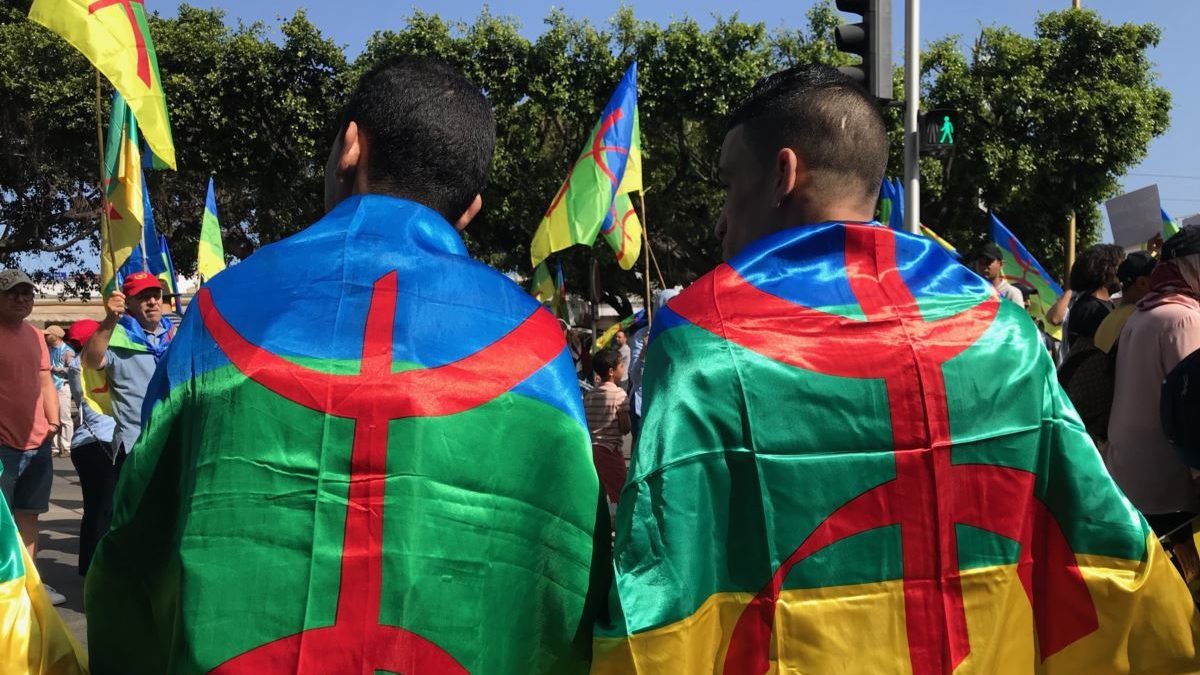
For Amazigh communities, visibility has always been an important part of political and cultural life. In previous World Cup celebrations, Amazigh symbols appeared alongside Moroccan flags and other expressions of belonging. Those moments helped tell a fuller story about Morocco: a country whose identity is Arab, African, Amazigh, Saharan, diaspora and more.
The question now is whether that diversity can remain visible as the tournament moves through expensive stadiums and global media spaces. Moroccan fans abroad may have more access to North American venues, especially those living in the United States and Canada. But many supporters in Morocco, including working-class and rural communities, will experience the tournament from cafes, homes, public screens and phones rather than from the stands.
This does not reduce the meaning of their support. In many ways, it may deepen it. The World Cup is not only made by those who can travel. It is also made by the families watching late at night, the neighborhoods where children wear Morocco shirts, and the communities that use football to speak about dignity, recognition and shared memory.
As Morocco prepares not only for the 2026 campaign but also for its role in the 2030 World Cup with Spain and Portugal, the issue of access will become even more important. If football is to showcase Morocco’s cultural richness, it must make room for the people who carry that richness every day, including Amazigh communities whose languages, music, symbols and regional identities are part of the country’s global image.
The Atlas Lions have given Moroccans a stage. The challenge is making sure that stage does not belong only to those who can afford the ticket.
Sources
- The Guardian: Morocco fans paying high costs to attend the World Cup
- The Guardian: Brazil 1-1 Morocco match report
- The New Yorker: Morocco’s World Cup team as a symbol of the Global South