
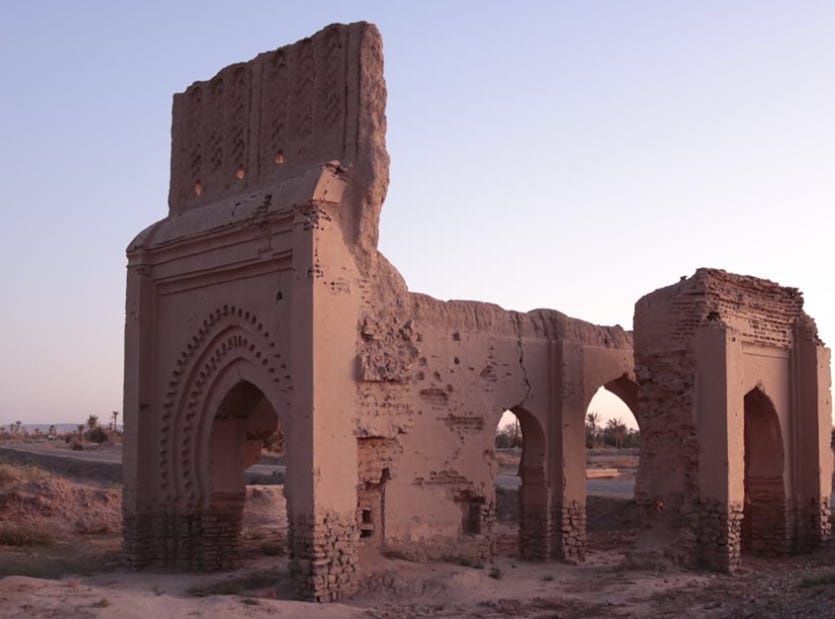
A new preservation project at Sijilmassa is turning one of Morocco’s most important medieval sites into the center of a wider debate over archaeology, heritage management and historical memory.
Le Monde reported on June 7 that archaeologists and intellectuals in Morocco are objecting to the construction of a large metal covering over part of the Sijilmassa site, near Rissani in the Tafilalt region. The structure is expected to cover about 7,000 square meters, roughly the size of a football field, above an area containing remains of houses and mosques.
Supporters of the project say the ruins need urgent protection. Sijilmassa, built largely in earthen architecture, has long been exposed to climate pressure, looting, urban expansion and neglect. The site has now been fenced and placed under closer supervision, and a visitor interpretation center is also being developed nearby.
But critics fear the intervention could damage the very heritage it is meant to protect. According to Le Monde, opponents are concerned about the use of columns, trucks, cranes and concrete in a fragile archaeological zone. They also argue that a large metal structure could visually transform a historic landscape shaped by earth, palm groves and desert light.
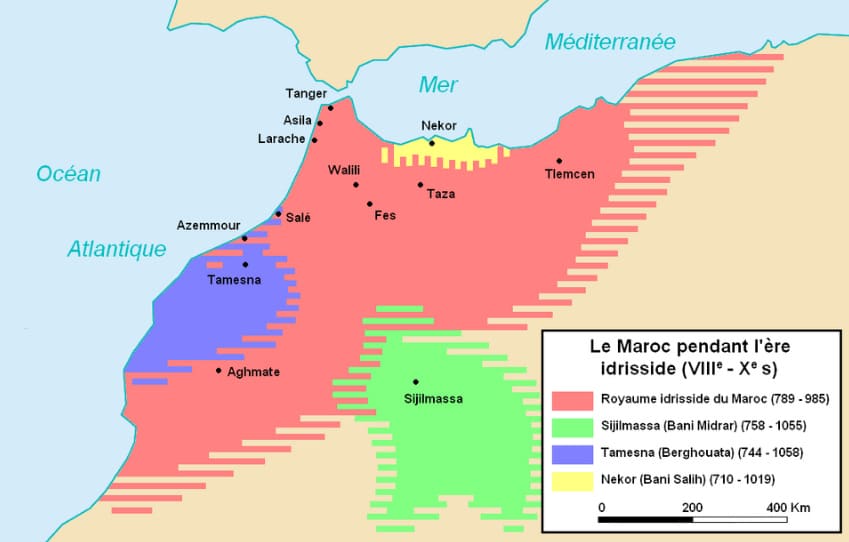
The controversy matters because Sijilmassa is not an ordinary ruin. Founded in the late eighth century by the Zenata Amazigh Meknassa, the city became one of the great caravan centers of the medieval Maghreb. For centuries, it linked Morocco to West Africa and the wider Mediterranean through gold, dates, scholarship, religion and trans-Saharan exchange.
The site also carries political and symbolic weight. Sijilmassa is associated with the Tafilalt, the cradle of the Alawi dynasty that has ruled Morocco since the seventeenth century. That gives any state-backed heritage project there a meaning that goes beyond archaeology alone.
The debate comes after a major phase of Moroccan-led research at the site. In July 2025, Al3omk reported that the National Institute of Archaeology and Heritage had carried out large excavations across about 9,000 square meters of Sijilmassa’s urban core during the 2024 and 2025 campaigns. The work was directed first by Lahcen Taouchikht, then by Asmaa Al-Qasimi, with a fully Moroccan research team.
Those excavations produced important findings. Researchers identified remains linked to Sijilmassa’s famous gold-minting activity, including a ceramic mold with traces of gold that Al3omk described as material evidence of dinar production. The same report said the team documented a residential quarter from the Alawi period, made up of 12 houses built around internal courtyards, along with storage rooms containing botanical evidence such as dates and other agricultural remains.
The mosque findings are especially significant. Al3omk reported that archaeologists uncovered the foundations of a medieval religious complex of about 2,620 square meters, with successive building phases from the early Midrarid period through the Almoravid, Almohad, Marinid and Alawi eras. If confirmed through full publication, those layers would make the site central to the study of Islamic and Amazigh urban history in Morocco.
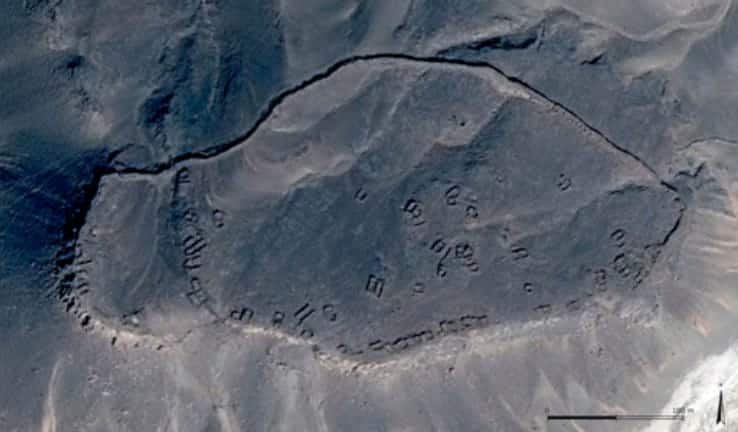
That is why the current dispute is so sensitive. Sijilmassa is only partly excavated, and much of the city remains under sand and soil. Le Monde cited INSAP director Abdeljalil Bouzouggar as saying in July 2025 that only 0.81 percent of the site had been uncovered. For critics, that raises a difficult question: should Morocco prioritize large-scale presentation and protection now, or invest more heavily in excavation and scientific documentation first?
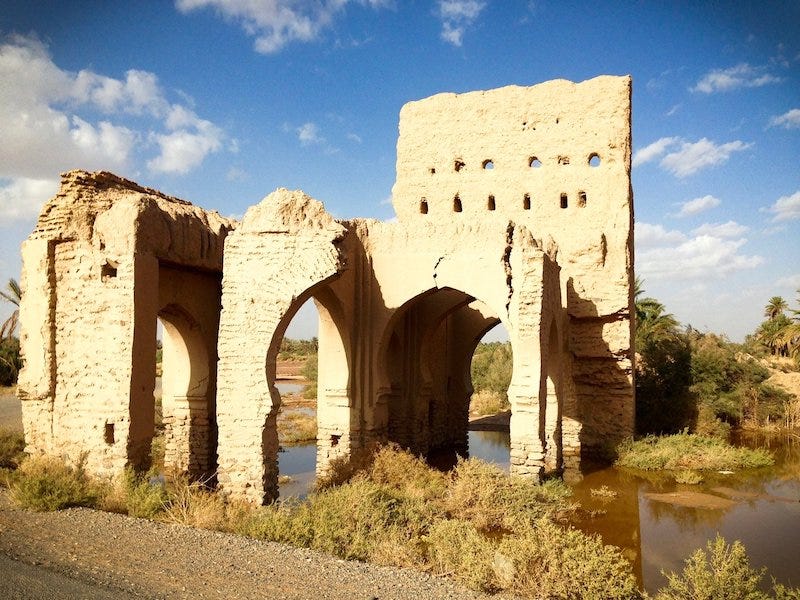
The answer may not be simple. Sijilmassa does need protection, and leaving the site exposed is not a neutral choice. But preservation projects at places of this importance require public trust, archaeological transparency and sensitivity to landscape. A cover can shelter ruins. It can also impose a new monument over an older one.
For Amazigh history, the stakes are clear. Sijilmassa was a city of Zenata origins, Saharan routes and African exchange. Its future should not be decided only as a construction problem. It should be treated as a living question about how Morocco tells the story of its desert, its dynasties and its Amazigh foundations.