
In the rose fields around Kelâat M’gouna, the harvest begins before the day has fully warmed. Women move through rows of Damask roses, gathering blossoms before the sun becomes too strong, then bringing them to be weighed, dried, or distilled into rose water and essential oil.
A May 2026 Vogue report places that work inside a larger Amazigh story. The area surrounding Kelâat M’gouna is largely inhabited by Amazigh communities, and rose cultivation has long been tied to domestic knowledge, seasonal income, and women’s labor. The Valley of the Roses is not only a postcard landscape. It is an economy built on hands, memory, and fragrance.
A harvest with deep roots
The Damask rose is believed to have arrived in Morocco centuries ago, and the valley’s climate made it a natural home. Families planted roses around crops such as almonds, corn, wheat, and barley, using the bushes as a protective border while also developing a valuable seasonal resource.
For generations, women tended the roses, picked the flowers, dried petals, and distilled them at home. The French Protectorate changed the industry by pulling the crop into an export-driven system. Distillation factories were established in Kelâat M’gouna in 1937 and Amednagh in 1947, and local families often sold roses through middlemen at low prices.
That history still shapes the valley. Women remain central to the harvest, but control over pricing, processing, and profits has not always stayed close to the communities doing the work.
Cooperatives change the balance
Since the 2000s, women-led cooperatives and local entrepreneurs have started to shift the industry’s center of gravity. Supported in part by Morocco’s Green Plan, cooperatives in the Kelâat M’gouna region now give women more room to process roses directly, share profits, gain training, and present their products at national and international fairs.
Vogue reports that close to seventy cooperatives now operate in the area. One example, Les Femmes du Dadès, supports roughly 400 female pickers around Souk El-Khémis Dadès. The cooperative model does more than add a new sales channel. It gives women a public role in preserving and presenting a tradition that was too often treated as anonymous rural labor.
Independent local brands are also emerging. Flora Sina, founded by Hafsa Chakibi in 2018, works directly with pickers and reinvests in community projects such as girls’ education, craft workshops, and school libraries. These efforts show how a heritage industry can become more equitable when the people closest to the crop are also closer to decision-making.
More than a festival image
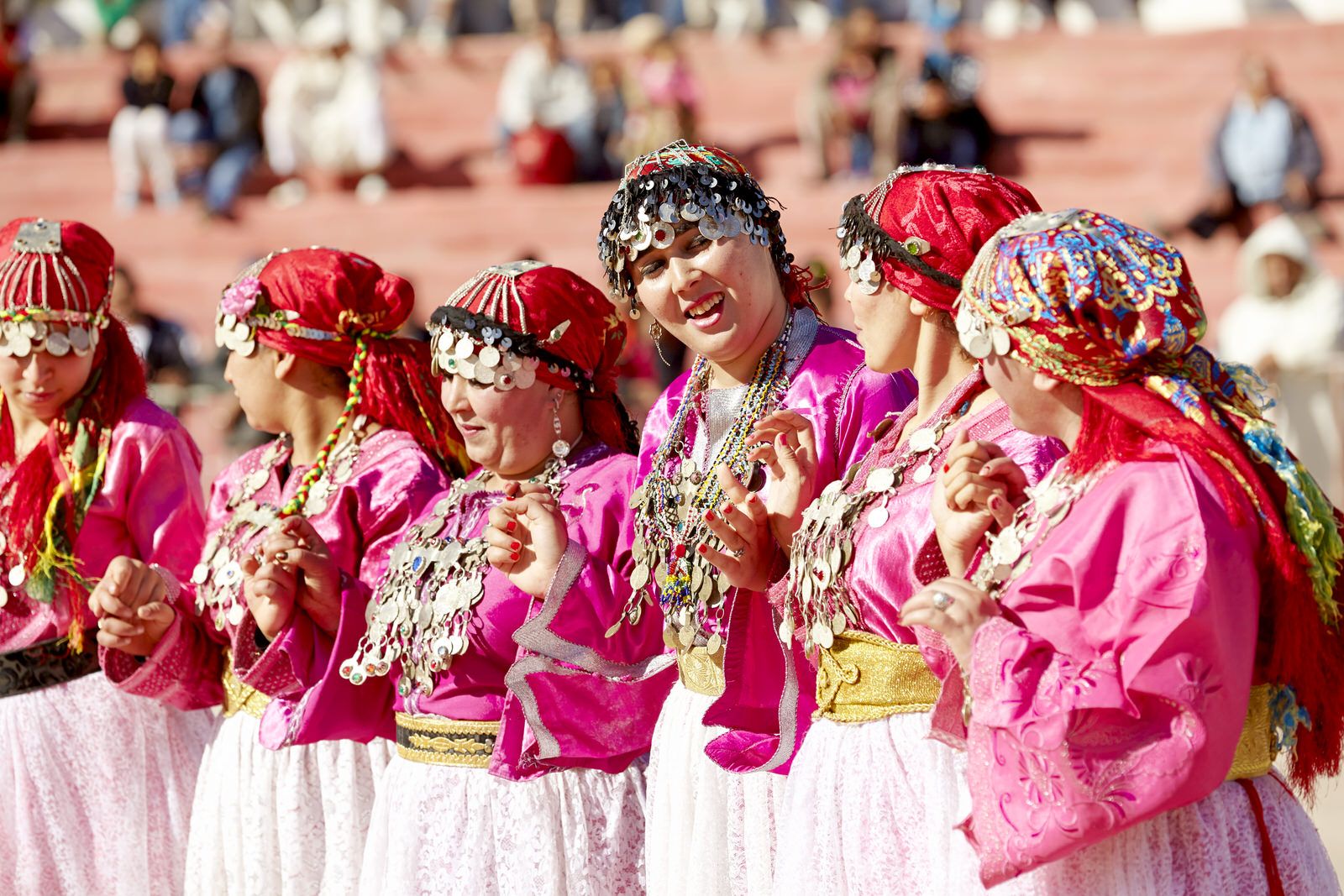
The Festival of Roses remains the valley’s most visible celebration, with music, dancers, products, and the crowning of a rose queen. But behind the celebration is a more serious question: who benefits from Moroccan heritage when it enters national and global markets?
For Amazigh women in the Valley of the Roses, reclaiming the harvest means turning inherited knowledge into fairer income and public recognition. It means carrying forward a practice without allowing others to reduce it to a decorative symbol. And it means showing that cultural preservation is strongest when the women who sustain it also shape its future.