
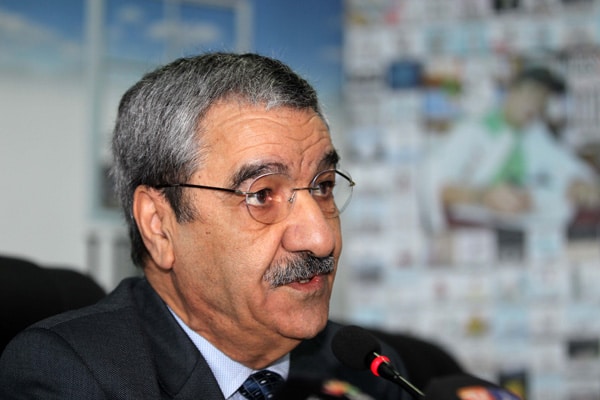
Algerian politician and former president of the Rally for Culture and Democracy (RCD), Saïd Sadi, insisted on speaking Amazigh (Tamazight) during a court hearing in Azazga, Kabylia, highlighting the ongoing challenges surrounding the use of Algeria’s official Amazigh language in public institutions.
The hearing concerned a lawsuit filed by Sadi against the Algerian newspaper El Watan, following the publication of an article under a pseudonym that he claims contained defamatory accusations against him.
According to Sadi’s account of the proceedings, the newspaper’s legal representatives initially requested a postponement to allow additional time to present evidence supporting the publication’s professionalism and journalistic standards. However, the presiding judge rejected the request.
During the hearing, Sadi asked the judge for permission to present his entire statement in Tamazight, explaining that his decision was not simply a personal preference but also a matter of linguistic rights.
The judge reportedly agreed to hear his statement with the assistance of Sadi’s lawyer, who provided translation into Arabic. Both sides agreed that Sadi would speak in short sentences to facilitate accurate interpretation.
The incident has renewed discussion about the practical implementation of Tamazight’s official status in Algeria. Although the language was recognized as a national language in 2002 and an official language in 2016, its everyday use in courts, public administration, and other state institutions continues to face practical challenges.
For many Amazigh speakers, the ability to communicate in their mother tongue before a judge represents more than a cultural issue. It concerns equal access to justice, linguistic dignity, and the recognition of Algeria’s diverse identity.
Sadi’s decision raises a fundamental question: What does official recognition of Tamazight mean if citizens still depend on informal translation arrangements to use their language in court?
The episode illustrates the gap that can exist between constitutional recognition and the practical measures needed to ensure that linguistic rights are fully respected in public institutions.