
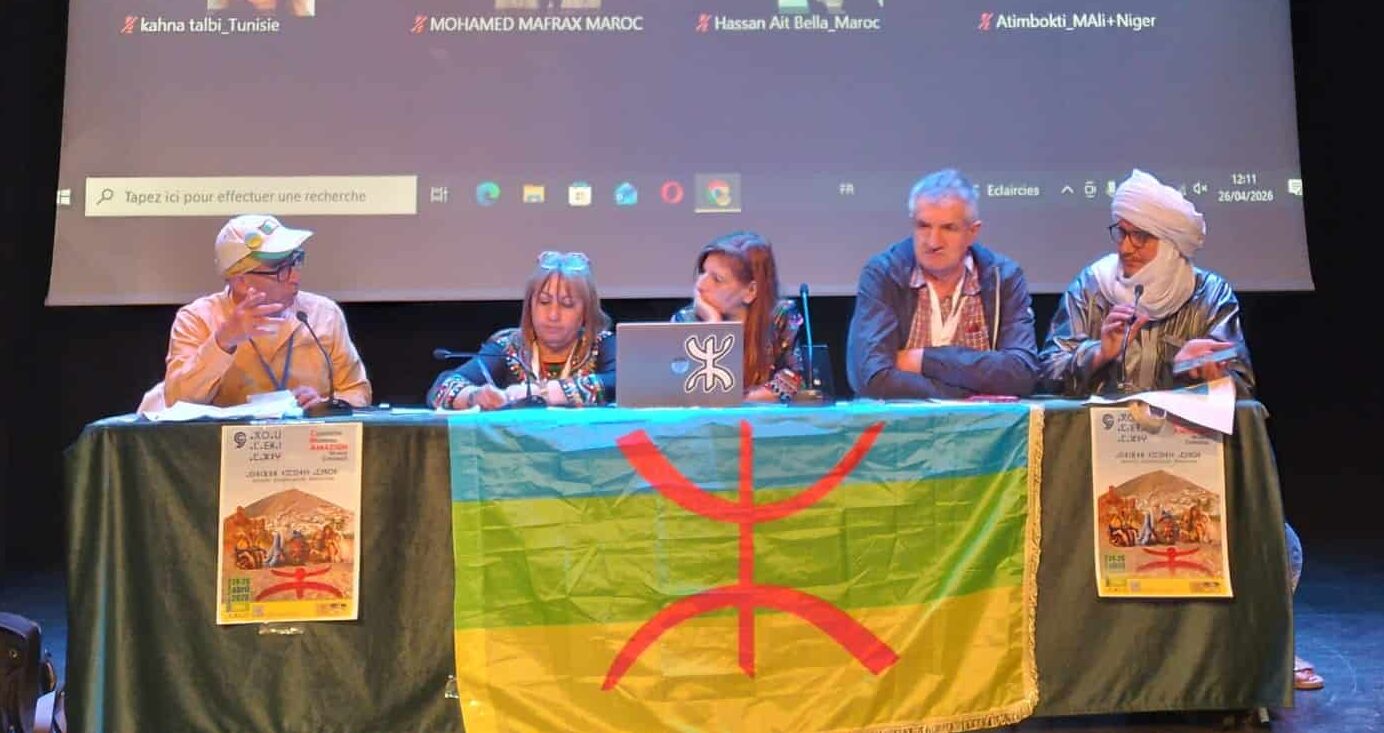
The World Amazigh Congress (CMA) says it will participate in the 19th session of the United Nations Expert Mechanism on the Rights of Indigenous Peoples, scheduled for July 13 to 17, 2026, at the Palais des Nations in Geneva.
The announcement places Amazigh advocacy inside one of the UN system’s main spaces for Indigenous rights, where governments, civil society groups, Indigenous representatives, and experts discuss legal standards, implementation gaps, and urgent rights concerns affecting Indigenous communities worldwide.
For Amazigh organizations, the Geneva meeting offers a platform to connect North African issues with global debates over language rights, cultural protection, land, education, political participation, and the treatment of Indigenous activists. The CMA has repeatedly framed Amazigh demands as both democratic and Indigenous rights questions, especially in countries where recognition exists on paper but remains weak in public services, schools, courts, and media.
The group’s latest notice did not publish a full intervention text, but it signals that Amazigh civil society intends to maintain an international presence ahead of the session. That presence is significant because many Amazigh concerns cross borders: Tamazight language policy in Morocco and Algeria, recognition of Amazigh communities in Tunisia and Libya, the rights of Tuareg communities in the Sahel, and pressure on activists in several parts of Tamazgha.
The UN forum also gives Amazigh groups a way to document rights concerns in a setting where states can be challenged by expert scrutiny and by peer Indigenous movements. Even when such meetings do not produce immediate policy changes, they help build a public record and keep North African Indigenous issues visible beyond regional politics.
The CMA said the session will be held in Geneva from July 13 to 17. Its participation is expected to focus attention on how international Indigenous rights standards apply to Amazigh communities and on the gap between formal recognition and everyday implementation.