
Morocco’s first official national pavilion at the Venice Biennale is carrying an Amazigh word into one of the world’s most visible contemporary art spaces.
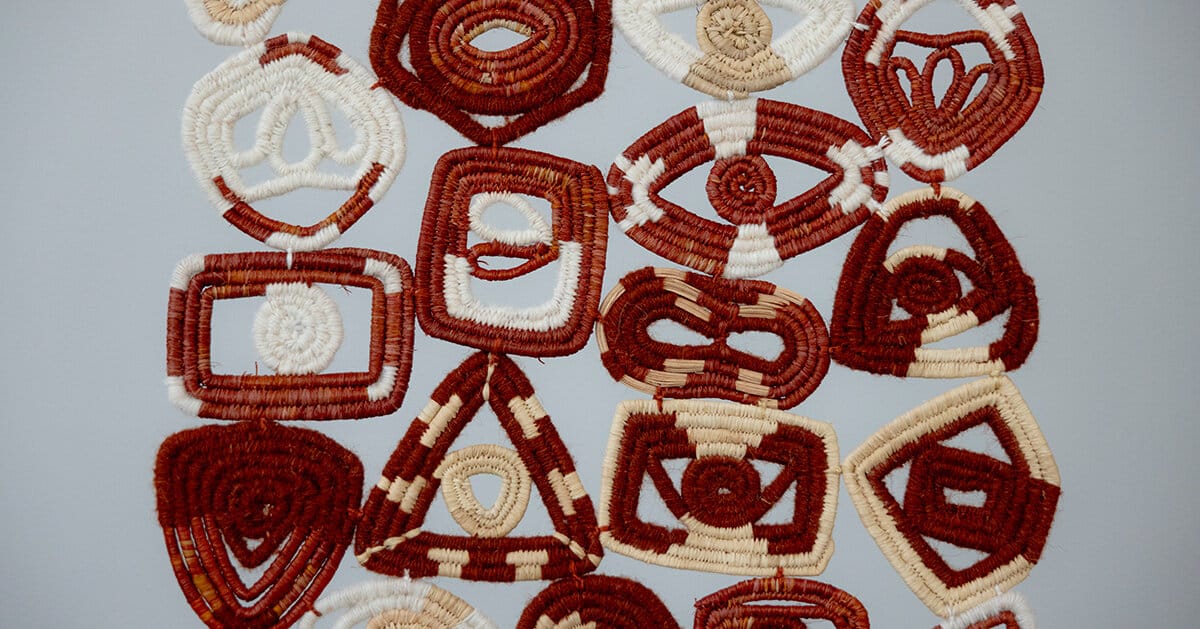
The pavilion, titled Azeṭṭa, is presented by Moroccan artist Amina Agueznay and curated by Meriem Berrada. According to La Biennale di Venezia, the exhibition is installed in the Arsenale and centers on asǝṭṭa, an Amazigh term connected to ritual weaving. The official description frames the work as a living threshold: a woven environment where memory, gesture, space and transmission meet.
For Amazigh communities, that choice of language matters. Weaving is not only a visual craft; it is a system of knowledge carried through families, regions and women’s labor. In Amazigh cultural life, textiles often hold memory through pattern, color, technique and ritual. By making Azeṭṭa the title and conceptual foundation of Morocco’s pavilion, the project places that inherited knowledge inside an international art conversation that often separates “craft” from “fine art.”
Agueznay’s practice has long worked across those boundaries. Trained as an architect and known for textile, jewelry and installation work, she has built much of her career in collaboration with Moroccan artisans and local communities. Vogue reported that the pavilion project draws on work by artisans from across Morocco and includes suspended woven forms, tactile elements and references to both Moroccan material culture and Venice’s own symbolic landscape.
The official Biennale page names Mohammed Benyaacoub as commissioner, Meriem Berrada as curator and Amina Agueznay as exhibitor. It describes Agueznay’s work as rooted in Moroccan vernacular knowledge and sustained collaboration with artisans, with the installation unfolding as a “second skin” across the Arsenale space. The pavilion is open during the 61st International Art Exhibition, which runs to November 22, 2026.
The cultural stakes are larger than one exhibition. Morocco’s contemporary cultural diplomacy has often relied on the country’s layered identity: Amazigh, Arab, Saharan, African, Mediterranean, Jewish and Andalusian. Yet Amazigh language and artistic knowledge have not always been centered in official international representation. In Venice, Asǝṭṭa makes Amazigh vocabulary, women’s craft and intergenerational transmission part of Morocco’s public face.
The project also arrives at a moment when traditional knowledge faces pressure from migration, market changes and the declining economic security of rural craft production. International recognition can raise visibility, but the harder question is what comes after the pavilion: whether artisans, especially women who carry weaving traditions, gain sustained support, fair compensation, training opportunities and room to innovate without being reduced to symbols.
That is why Asǝṭṭa is significant beyond the art world. It suggests that Amazigh heritage is not a static archive or decorative reference. It is a living language of making, one that can shape contemporary Moroccan art while reminding audiences that culture is transmitted through hands, memory and community as much as through museums and institutions.
Sources
- La Biennale di Venezia: Morocco (Kingdom of), Asǝṭṭa: https://www.labiennale.org/en/art/2026/morocco-kingdom
- La Biennale di Venezia: Biennale Arte 2026 National Participations: https://www.labiennale.org/en/art/2026/national-participations
- Vogue: “The Curator, the Artist, and the Artisans Bringing Morocco to Venice,” May 2, 2026: https://www.vogue.com/article/amina-agueznay-morocco-pavillion-venice-2026