
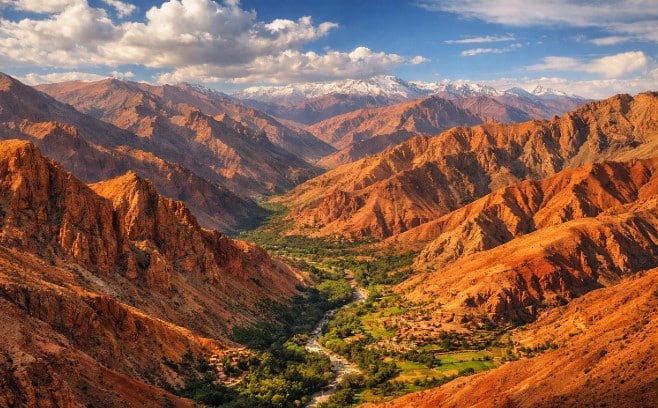
Morocco’s M’Goun Geopark is highlighting its August festival calendar as part of a wider effort to connect tourism with the living Amazigh heritage of the Central High Atlas.
The geopark, which covers mountain communities, valleys, geological sites, and cultural routes, presents local festivals as more than seasonal entertainment. Its cultural materials describe festivals as spaces where music, dance, craft, foodways, oral traditions, and local identity are transmitted between generations.
For Amazigh communities in the High Atlas, this framing is significant. The region’s public image is often reduced to scenery and adventure tourism, while local languages, performance traditions, and village economies receive less attention. By placing culture within the geopark experience, organizers are linking environmental tourism to the communities that have shaped the landscape over centuries.
Ahidous and other collective performance traditions are central to that identity. They bring together poetry, rhythm, movement, and social commentary, often marking weddings, seasonal gatherings, and village celebrations. In festival settings, these forms can reach new audiences, including Moroccan urban visitors and international tourists.
The approach also carries risks if culture is treated only as a tourism product. Local artists and associations have long argued that heritage promotion should include fair compensation, language visibility, community leadership, and investment in cultural education.
The M’Goun Geopark’s August emphasis therefore offers a useful test of how Morocco’s mountain destinations can support sustainable tourism while keeping Amazigh communities at the center of their own cultural narratives.