
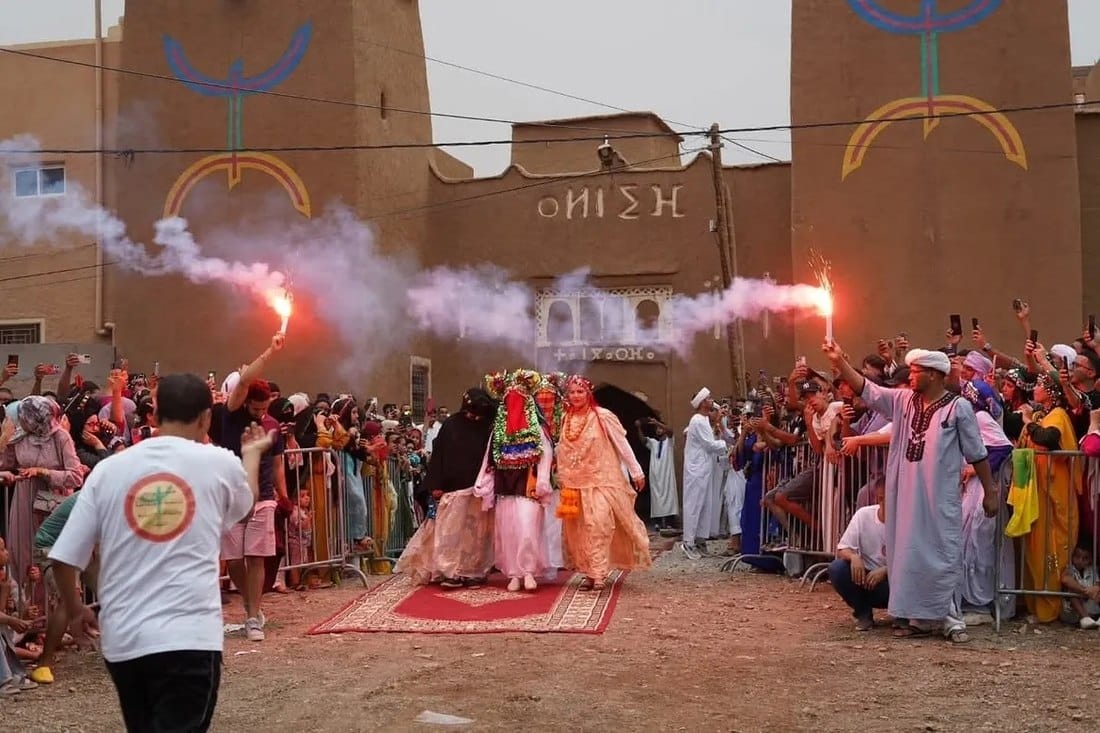
Alnif in southeastern Morocco is preparing a new edition of its annual Amazigh group wedding, with organizers expecting 20 brides and 20 grooms to take part in three days of ceremonies during August 2026.
The gathering is organized by the Bougafer Association in coordination with local authorities, according to a report published by Middle East Online on August 4. The event brings families from Alnif together with members of the local diaspora who return from other Moroccan cities and from abroad for the summer.
A shared wedding rooted in solidarity
Youssef Benamar, a civil-society organizer involved with the event, said the modern annual program has continued since 2007. Its purpose extends beyond staging a public celebration: the group format allows participating families to share costs and take part in the same ceremonies regardless of income or social position.
That principle reflects an older way of organizing community life in Alnif and neighboring oasis areas. When families depended more heavily on pastoral movement and settlements were separated by long distances, agreeing on a common place and time made it easier for relatives and neighbors to attend weddings. The practice survived the shift toward settled life and has become part of the area’s cultural identity.
Today, migration gives the gathering another role. Many Alnif families live elsewhere in Morocco or abroad, and the annual wedding offers a fixed occasion to return, renew family relationships and introduce younger generations to local traditions.
Three days of Amazigh ceremony
The announced program retains a sequence of inherited rituals. The first day, known locally as “Asouggas,” brings the brides together before they are accompanied to a ceremonial space called “the tent.” Symbolic roles are assigned to participants described as “ministers,” who take part in staged tests before a committee.
Henna ceremonies for the couples and performances of Ahidous follow in the evening. Ahidous combines collective song, poetry, rhythm and coordinated movement, and remains one of the most visible forms of Amazigh cultural expression across parts of southeastern Morocco and the Atlas.
The second day centers on additional Ahidous performances attended by the couples and their families. The final stage, called “Assoufekh,” includes the ceremonial unveiling of the brides’ faces before those gathered, according to the program described by organizers.
A new edition of a continuing tradition
Amazigh World News covered Alnif’s group-wedding tradition in August 2025, highlighting its role in easing wedding expenses and preserving collective celebration. The 2026 edition is a separate annual cycle, with organizers again citing 20 participating couples and emphasizing the return of diaspora families.
The gathering also connects cultural preservation with the local economy. A large summer audience can support shops, transport providers and other services during the celebration, while the ceremony gives Alnif wider visibility as a center of living Amazigh heritage.
The 2026 report did not provide exact ceremony dates, a complete public schedule or attendance estimates. Those details remain to be confirmed by organizers before the event begins.