
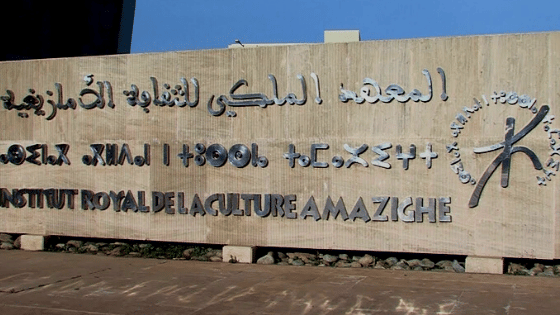
Morocco’s Royal Institute of Amazigh Culture and the Institute of University Pedagogy of Bamako are preparing an international colloquium in Rabat on education and the transmission of endogenous languages, with a focus on Amazigh in Morocco and languages of the Sahel.
The meeting, scheduled for November 26 and 27, 2026 at IRCAM, grows out of a framework agreement signed by the two institutions in November 2025. Its theme places Amazigh alongside Sahelian national languages, treating both as living cultural systems that carry collective memory, local knowledge and social cohesion.
IRCAM’s call frames the issue as both cultural and educational. It notes that endogenous languages often face marginalization in school, administration and media systems dominated by French, Arabic or English. Migration, economic change and globalization also weaken traditional forms of intergenerational transmission.
The colloquium proposes to examine how formal education can become a tool for preservation rather than displacement. Planned themes include bilingual and plurilingual learning, teacher training, school programs, oral and literary expression, language policy, digital humanities, corpus building and platforms for language learning.
The comparative Morocco-Sahel framing is significant. Amazigh language policy is often discussed mainly inside Morocco’s national debate, while Sahelian language issues are treated through separate West African education frameworks. Bringing the two into one academic space creates room for shared questions about mother-tongue education, institutional recognition and locally grounded development.
The scientific committee includes IRCAM rector Ahmed Boukous, IRCAM secretary general El Houssaïn El Moujahid, IPU Bamako director general Alou Ag Agouzoum and scholars from Mali, Guinea and Morocco. Accepted papers may be published in conference proceedings or a collective volume after evaluation.
For Amazigh-language education, the colloquium arrives as Morocco continues to debate the pace and quality of Tamazight implementation in schools. It also points to a broader African conversation: how education systems can carry linguistic diversity into the future instead of treating it as an obstacle to modernization.