
Who owns a city’s history, and who gets to decide how that history is remembered?
That question is at the heart of a new controversy involving Algeria’s cultural heritage and the historical identity of its Amazigh population.
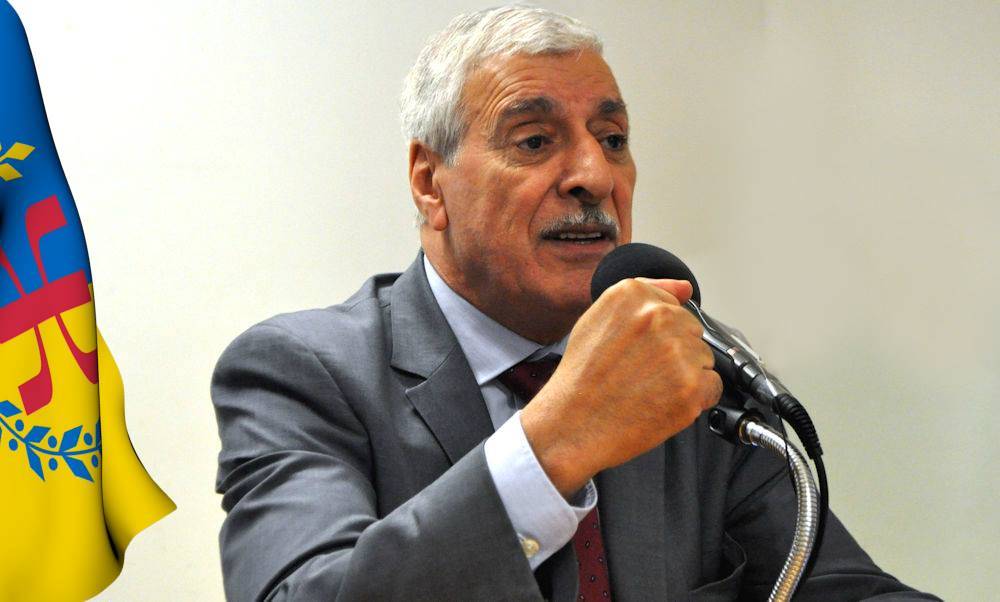
Ferhat Mehenni, president of the Movement for the Self-Determination of Kabylia (MAK) and the Kabyle government in exile, has strongly criticized the inclusion of Béjaïa, Mila, and Nedroma in the Register of Architectural and Urban Heritage in Arab Countries.
In a letter dated October 31, 2026, addressed to UNESCO and the League of Arab States, Mehenni expressed concern that the decision could contribute to the gradual erasure of the Amazigh identity of these historic cities.
For Mehenni, the issue goes far beyond a heritage classification. It touches on a much deeper question: the place of Amazigh history, language, and identity in the official narrative of Algeria’s past.
A history that cannot be reduced to one identity
Béjaïa is not just another historic city on Algeria’s Mediterranean coast. Known for centuries as a center of learning, commerce, and cultural exchange, it played an important role in the history of North Africa, particularly during the Amazigh Hammadid dynasty.
Its history reflects centuries of interaction between Amazigh, Arab, Mediterranean, and other cultural influences.
Mila, too, carries a long and complex history, with roots extending through ancient Numidian, Roman, and later Islamic periods.
For many Amazigh people, recognizing these different historical influences is not the problem. The concern arises when one identity appears to overshadow the others.
This is the argument Mehenni makes in his letter.
He maintains that acknowledging Arab contributions to North African civilization should never mean overlooking the indigenous Amazigh foundations upon which much of that history was built.
More than a dispute over monuments
The controversy comes against the backdrop of a long-running debate about Arabization and cultural identity in Algeria.
Since independence in 1962, language and identity have remained sensitive political and cultural questions. Although Tamazight is now recognized as an official language alongside Arabic, disagreements continue over the representation and preservation of Amazigh heritage.
Mehenni argues that the latest classification reflects what he considers a broader pattern of cultural marginalization.
He has called for the registration procedures to be reviewed, for the historical criteria behind the decision to be made public, and for the Amazigh identity of Béjaïa and Mila to receive explicit recognition.
Algerian authorities, meanwhile, have presented the inclusion of the three cities in the regional heritage register as an achievement for cultural preservation and international recognition.
It is also important to distinguish between a city being listed in a register covering Arab countries and a declaration that its entire history is ethnically Arab. The registration itself does not necessarily establish such an exclusive identity.
Who gets to tell the story?
Beyond the political disagreement, this controversy raises a question that resonates across North Africa.
Can a region’s heritage be celebrated internationally without simplifying the complex identities that shaped it?
The history of Béjaïa, Mila, and other North African cities was not written by a single people or culture. It developed through centuries of migration, trade, political change, and cultural exchange.
For many Amazigh communities, preserving that history means ensuring that their language, traditions, and historical contributions remain visible rather than being absorbed into broader national or regional labels.
Whether the disputed registration will be reconsidered remains unclear.
But the debate has already brought an old question back into the spotlight: How can North Africa celebrate its shared history while respecting the distinct identities that helped create it?
For those concerned about the future of Amazigh heritage, that question is about more than the past. It is also about what future generations will learn about who they are and where they come from.