
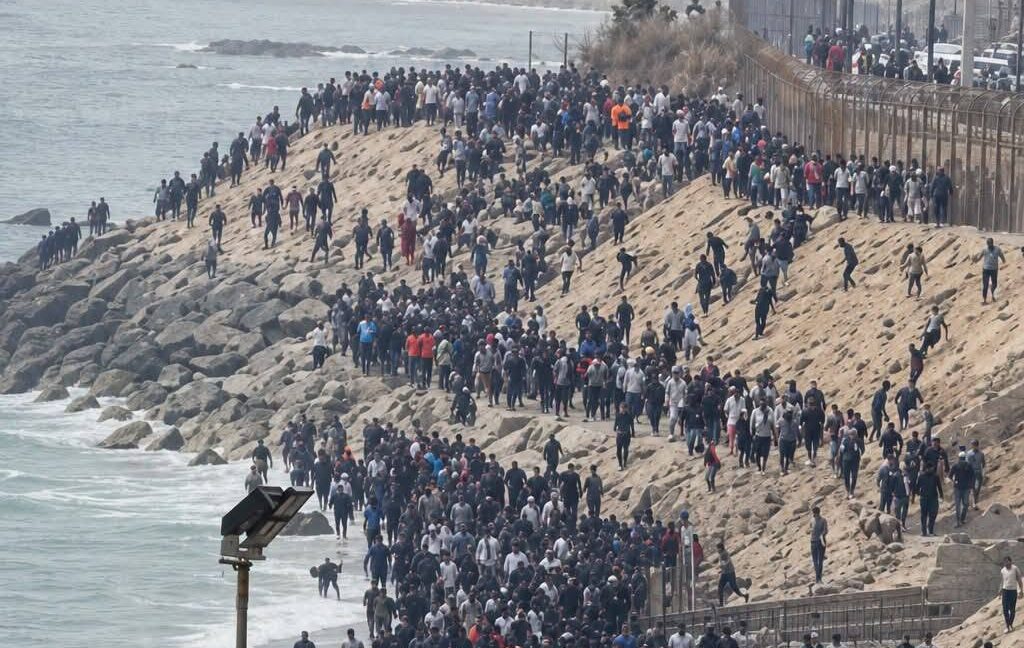
A Moroccan rights and media organization has called for a transparent and independent investigation into the mass movement of people toward Ceuta and Melilla on July 30 and 31, turning a border emergency already covered as a migration crisis into a fresh accountability question for Moroccan and Spanish authorities.
Le Monde Amazigh reported that the National Center for Media and Human Rights said it was following the aftermath of the events with concern and asked for political and administrative responsibility to be established. The group said reports from rights actors and civil society groups pointed to deaths, missing people and injuries, while stressing that figures still needed official verification.
The demand comes after one of the largest recent surges toward Spain’s North African enclaves. International reporting described tens of thousands of attempted or completed crossings into Ceuta from Morocco, followed by rapid returns, emergency deployments and a wave of political claims across Europe. The Associated Press separately examined misinformation around the episode, including claims that Spanish immigration policy alone triggered the movement and claims that Morocco had deliberately opened the border.
For Amazigh World News readers, the development matters because the crisis unfolded along the Rif’s northern frontier, where border economies, youth unemployment, migration networks and European border policy intersect. The rights center’s intervention shifts attention from the raw numbers of crossings to questions about missing people, public information and the official handling of a humanitarian emergency.
The center also criticized what it described as official silence and asked the government spokesperson to provide public clarification on the toll, causes and measures taken or planned. Until verified casualty lists and official findings are available, the most responsible framing is that the center has demanded an investigation into reported deaths and disappearances, while international outlets have documented the scale and political fallout of the crossings.