
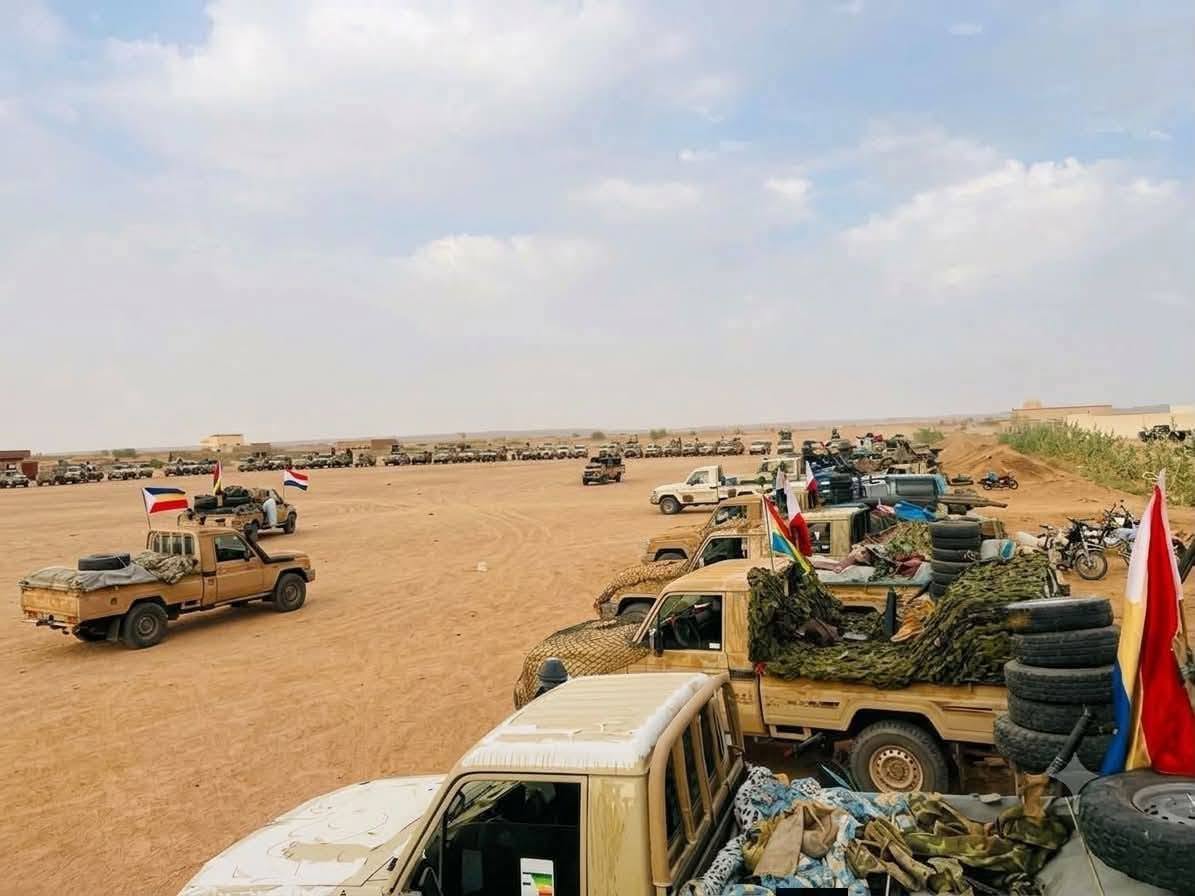
New international reporting is adding context to the latest escalation in Mali, where the Tuareg-led Azawad Liberation Front has coordinated battlefield pressure with JNIM, the al-Qaeda-linked armed group, against the military junta and its Russian allies.
The cooperation grew out of local reconciliation efforts and a shared objective of weakening the junta led by General Assimi Goita, despite deep ideological differences between Azawad pro-independence forces and jihadist factions. The newspaper described the arrangement as a tactical convergence rather than a formal merger, with Azawad forces focused on autonomy or independence in northern Mali and JNIM pursuing a wider Islamist agenda.
The Associated Press separately reported that Mali’s army said several northern towns, including Gao and Sevare, had been attacked, while the Azawad Liberation Front announced a renewed offensive around Anefis. Control claims in the area remain difficult to verify independently, but the reports point to sustained instability across northern Mali and the broader Sahel.
Azawad has long been tied to Tuareg political aspirations, military mobilization, and repeated cycles of state violence, displacement, and failed peace processes. The current alignment also raises difficult questions for civilians: tactical cooperation may strengthen anti-junta pressure, but it also risks further blurring lines between self-determination claims, jihadist strategy, and regional security responses.