
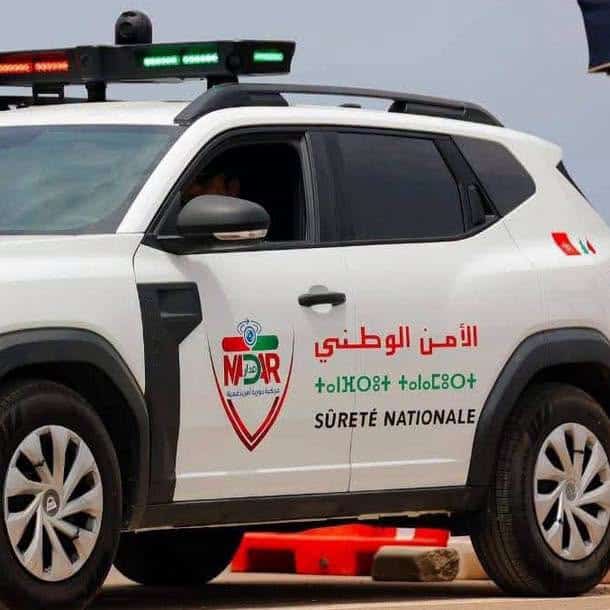
Recent photos of Rabat’s new smart police patrol vehicles have drawn attention for a detail that is becoming increasingly visible in Morocco’s public services: Tifinagh lettering.
AkalPress reported that the two smart patrol units, identified as Aman and Madar, entered service in Rabat in July 2026 with Amazigh script included in their vehicle design. The move follows earlier use of Tifinagh by Morocco’s national security administration, including on some vehicles and public-facing material linked to the Directorate General of National Security.
The change is modest in practical terms, but symbolically important. Police vehicles are among the most visible objects in public space. Adding Tifinagh places Tamazight in everyday civic infrastructure rather than limiting it to cultural institutions, festivals or commemorative events.
Amazigh language advocates have connected such measures to Organic Law 26.16, which sets out implementation stages for the official character of Tamazight. Article 28 of that framework is often cited in discussions of public-service integration, especially where language visibility, signage and institutional communication are concerned.
The Rabat example also comes during a year in which the visibility of Tamazight in state documentation and services has become a recurring public issue. Morocco has already moved toward adding Tamazight to its new biometric passport, and advocates have called for wider use on identity cards, banknotes, public websites and administrative counters.
The central question is whether visible measures are followed by functional ones. Tifinagh on vehicles helps normalize the script in public space, but full officialization also depends on trained staff, accessible services, clear administrative rules and the ability of citizens to use Tamazight when dealing with public institutions.