
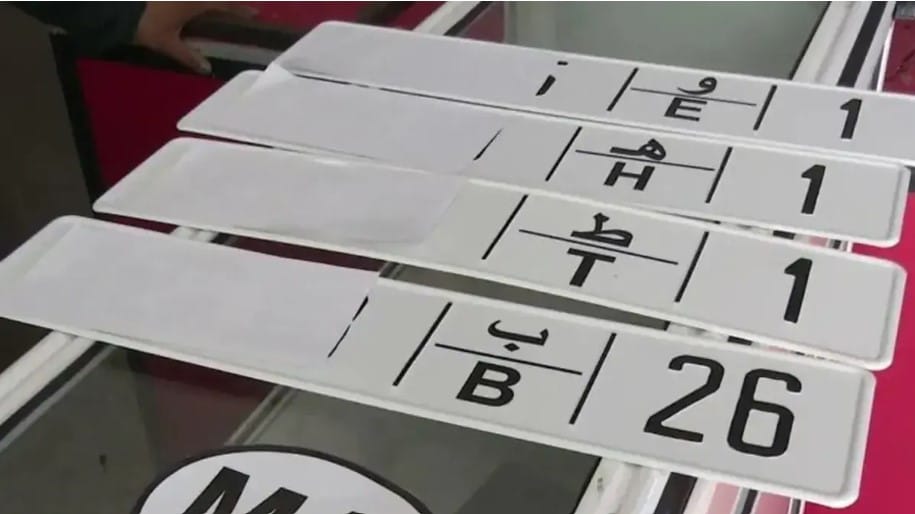
A new controversy over vehicle registration plates in Morocco has reignited debate over the implementation of Tamazight as an official language, raising broader questions about its presence in public services and government institutions.
According to Al Alam Amazigh, the discussion follows a transport ministry decision adding Latin letters alongside Arabic letters on vehicle plates. The change is framed as a practical measure for international circulation and administrative readability, but Amazigh-language advocates are asking why Tifinagh was not included at the same time.
The issue is symbolic as much as technical. Morocco’s 2011 constitution recognizes Tamazight as an official language, and the 2019 organic law on implementing that status identifies Tifinagh as the script used to write and read the language. For critics of the plate decision, adding Latin equivalents while leaving out Tifinagh appears to reproduce a hierarchy between scripts in a public-facing state document.
The plate change is also connected to rules for Moroccan vehicles traveling abroad. SNRT has previously reported National Road Safety Agency explanations that vehicles used internationally must carry Latin-letter equivalents for the Arabic plate series and an MA country mark, reflecting international road-traffic requirements. That practical requirement does not settle the domestic-language question now being raised by Amazigh advocates.
The controversy arrives as Tamazight visibility has expanded in some official spaces, including public signage and new identity-document debates. The license-plate case shows that implementation remains uneven and often depends on whether each administrative reform is reviewed through a language-rights lens before it is adopted.
For Amazigh campaigners, the demand is not simply decorative inclusion. They argue that public-service reforms should treat Arabic and Tamazight as co-official languages from the design stage, with practical solutions developed for each document or interface. Whether the transport ministry revisits the plate model will be watched as another test of Morocco’s gradual officialization policy.