
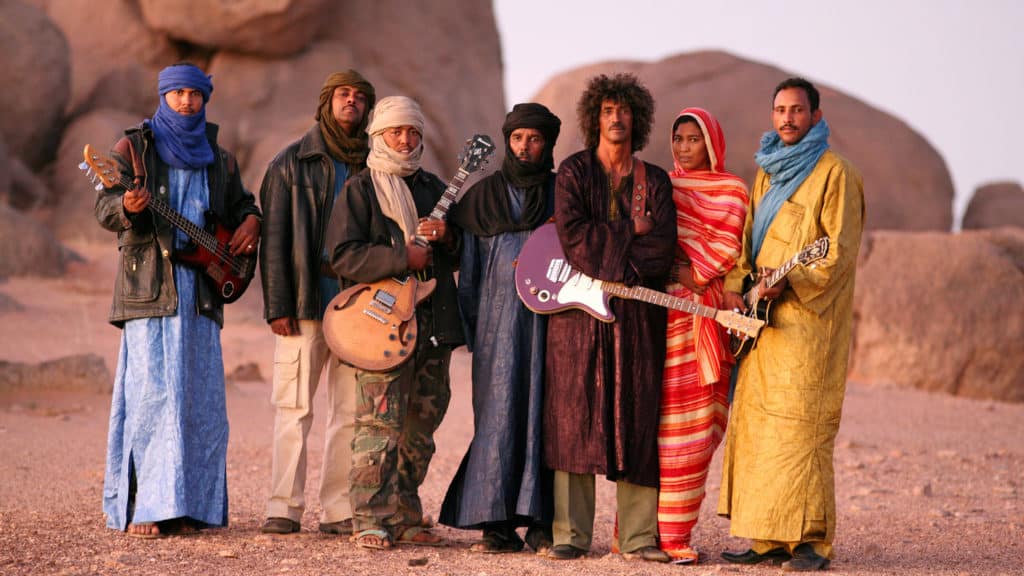
Tuareg music continues to carry stories of exile, displacement and cultural survival to new audiences. A Guardian interview with members of Tinariwen and Imarhan highlights how two generations of Tamasheq-speaking musicians are using music to preserve memory while responding to the pressures facing Tuareg communities across the Sahara.
Tinariwen, formed in 1979 and later recognized internationally, has long been associated with the sound sometimes called desert blues. Its songs are rooted in the experiences of Tuareg life, including exile, armed conflict and the search for dignity. The group’s newer work continues that tradition while reflecting the insecurity that has affected musicians and civilians in Mali and the wider Sahel.
Imarhan represents a younger generation building cultural infrastructure closer to home. The band’s Aboogi studio in Tamanrasset has become a creative space for musicians from the region, including women artists whose voices have often been underrepresented in international coverage of Tuareg music.
For Amazigh and Tuareg communities, music is more than entertainment. It is a public archive of language, memory and political feeling. Songs in Tamasheq help keep local expression visible in a global music industry where minority languages are often treated as background texture rather than living systems of thought.
The Guardian report includes claims and personal accounts connected to conflict and displacement; those details should be reviewed carefully before publication. The cultural point remains clear: Tuareg musicians continue to turn loss into language, rhythm and collective memory.
Source: The Guardian interview with Tinariwen and Imarhan.