
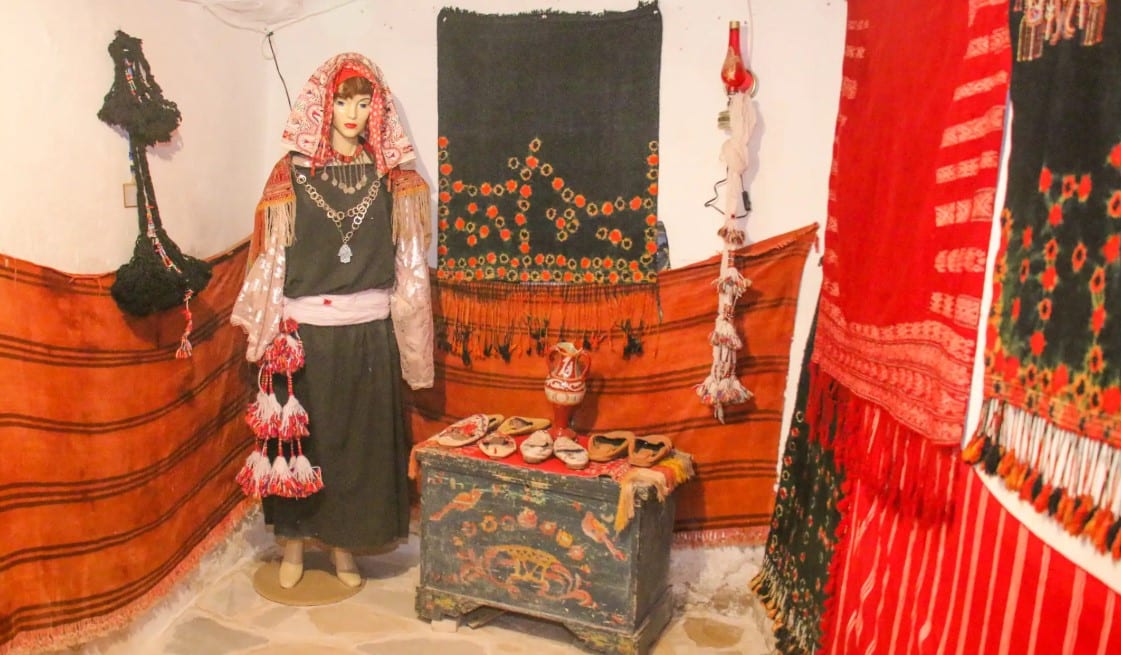
In the hilltop village of Tamezret in southeastern Tunisia, a small community museum is preserving objects, crafts and oral histories that might otherwise disappear as residents leave the Dahar mountains for cities or life abroad.
The Berber Museum of Tamezret was founded in the late 1990s through the work of Monji Bouras, a local cultural advocate who collected objects connected to the lives of his ancestors and recorded memories from village elders. The museum presents those materials as evidence of Tamezret’s Amazigh history and of the civilizations that have passed through southern Tunisia.
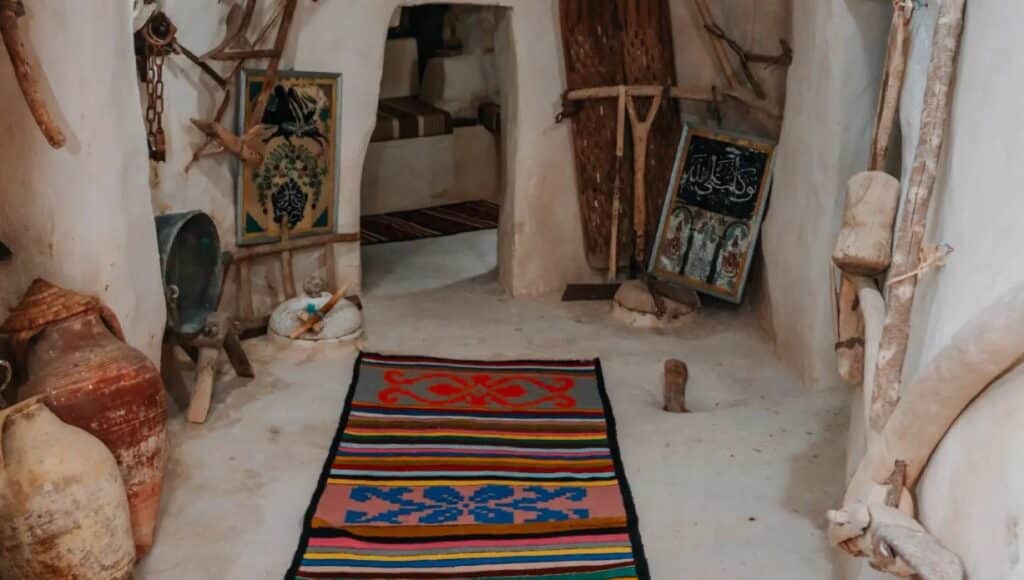
A museum built around local memory
Unlike a large state institution, the museum grew from individual and community effort. Bouras has devoted time and personal resources to protecting what remains of the village’s material memory, according to Destination Dahar, a regional sustainable-tourism initiative.
The collection links household objects, architecture and spiritual practices to the wider history of the Djebel Dahar. It also treats everyday craft as a form of historical documentation. When visitor numbers are low, Bouras reproduces traditional woven margoums, shawls and leather boots by studying century-old examples and making new pieces by hand.
That work keeps knowledge in circulation rather than placing heritage behind glass as something finished. A copied textile or leather object can carry techniques, patterns and vocabulary into another generation, while stories collected from elders preserve context that an artifact alone cannot explain.
Tamezret faces depopulation
The museum’s role has become more urgent as the village loses residents. Reporting published by Qantara in June 2026 described abandoned and damaged houses across Tamezret and cited local Amazigh cultural advocate Jalloul Ghaki as estimating that just over 400 people in 95 families remain.
Ghaki linked the decline to limited employment, difficult climatic conditions and migration to Tunisia’s larger cities and foreign countries. Basic services are also constrained, he said, making permanent residence particularly difficult for older people and those with chronic health needs.
Tamezret’s historic architecture is part of what is at risk. Traditional walls were made with local stone and a calcareous material produced from resources available in the area, while palm trunks were used for roofing. Qantara reported that no state preservation plan currently covers the village’s historic quarter.
Tourism brings opportunity and pressure
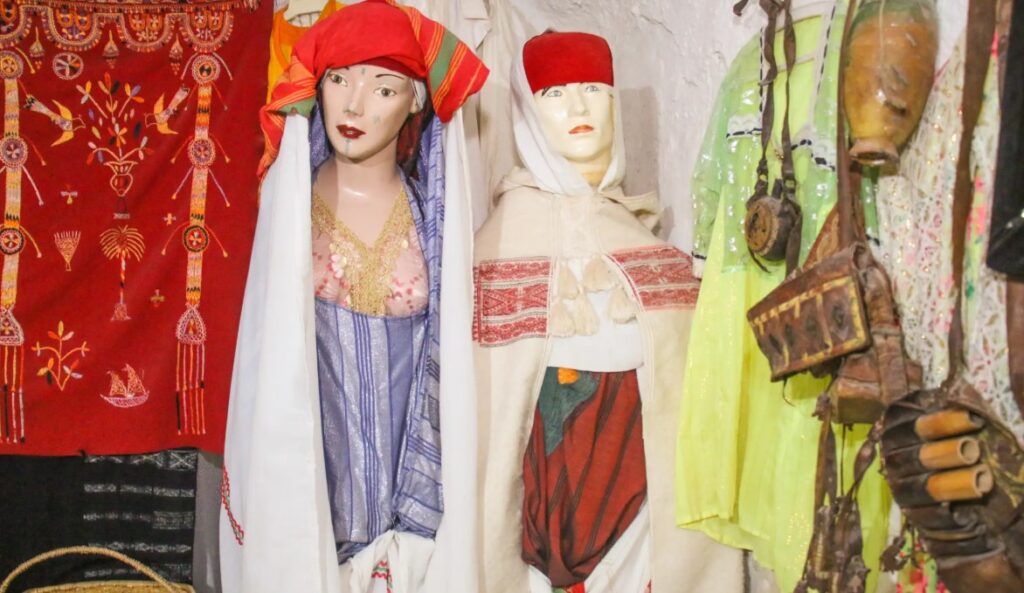
Visitors are drawn to Tamezret for its landscape, built heritage and Amazigh identity. Tourism provides an important economic lifeline in a region with few alternatives, and the museum gives visitors a place to encounter the community’s history through locally preserved objects rather than through a generic presentation of southern Tunisia.
At the same time, residents have raised concerns that brief tourist stops can reduce Amazigh culture to photographs, souvenirs and seasonal folklore. Buses may arrive for short visits before moving on, while the economic benefits do not necessarily reach all of the remaining families.
The museum offers a different model. Its collection is rooted in the memories of residents, and its craft production connects cultural presentation with the continued practice of inherited skills. That approach gives local people a stronger role in deciding how their history is explained.
Preservation beyond a single building
Protecting the museum cannot be separated from protecting Tamezret itself. Objects, woven goods and recorded memories draw meaning from the houses, landscape, language and social life that produced them. If the village continues to empty, the museum may preserve vital evidence while also documenting a community under pressure.
The challenge is therefore larger than attracting more visitors. Sustainable preservation would need to support residents, traditional architecture, local cultural organizations and the transmission of Tamazight alongside tourism.
For now, the Berber Museum of Tamezret stands as an example of community-led cultural work: one person’s collection has become a public record of Amazigh life in Tunisia’s Dahar mountains, and a reminder that heritage survives through people as much as through objects.