
Moroccan architect Salima Naji has won the Grand Prix at the 2026 Arab World Institute Design Awards in Paris, bringing international attention to a Tiznit heritage project rooted in earth architecture, local craftsmanship, and the cultural landscape of southern Morocco.
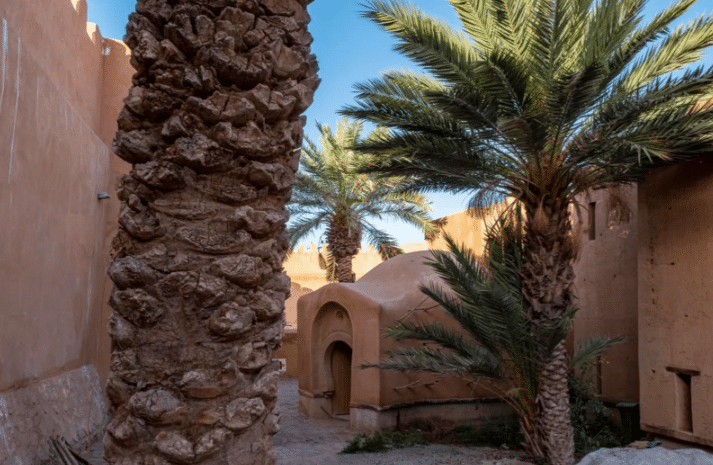
The award recognized the Tiznit Heritage Interpretation Center, a project built within the city’s historic ramparts and shaped by rammed earth, stone, wood, and other local materials. The jury presented the work as an example of contemporary architecture that does not treat heritage as decoration, but as a living source of design knowledge.

Naji’s practice has long focused on conservation, collective memory, and the built heritage of Morocco’s south. Based in Tiznit since 2008, she has worked on projects that connect architecture with anthropology, artisanship, and the social life of historic places. The IMA award places that approach in a wider design conversation at a moment when sustainable building is often framed through imported technologies rather than inherited techniques.
The Tiznit center stands out because it turns local construction methods into a modern public space. Rather than isolating craft as folklore, the project uses it as the project’s structural and aesthetic language. That is especially significant for Amazigh regions where architecture, material culture, and collective memory are closely tied to place.
The 2026 edition of the IMA awards featured 26 finalists, including several Moroccan creators. Their presence underlined Morocco’s growing visibility in design fields where questions of heritage, ecology, and identity increasingly overlap.
For Amazigh cultural coverage, Naji’s win matters beyond the prize itself. It shows how southern Moroccan heritage can enter international design institutions without being stripped of its local vocabulary. The award also strengthens the case for treating vernacular architecture as a contemporary resource, not as a relic to be preserved only after it has been endangered.