
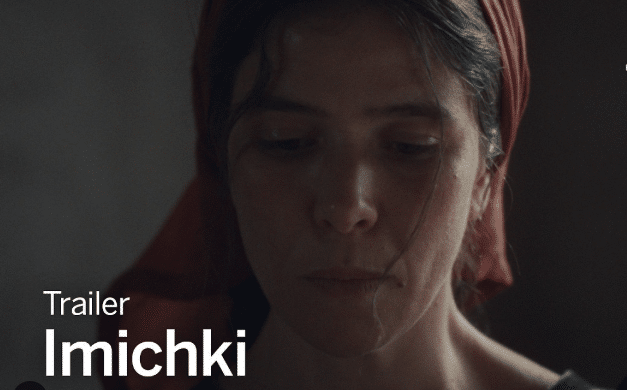
An Amazigh-language short film set in southern Morocco is reaching one of the world’s most prominent festival stages, with Yza Nouiga’s Imichki selected for the Toronto International Film Festival’s 2026 Short Cuts program.
The 15-minute fiction film follows Meriem, a young woman in a village in 1975 who tries to write to her husband after he leaves for France and stops sending news. The premise is intimate, but the film’s subject is larger: migration, illiteracy, gendered silence, and the difficulty of communicating across distance when social limits narrow a woman’s choices.
Production information from Les Films Cosmos lists Nouiga as writer and director, with Oumaima Oughaou and Youssef Ourras in the cast. The film is produced through a Canadian structure and distributed internationally by Spira, reflecting the increasingly transnational path taken by many Moroccan and diaspora filmmakers.
Festival roundups identify Imichki as a world premiere at TIFF. Souzian’s MENA festival guide lists the film’s language as Amazigh and places it in the Morocco section of regional coverage, while SODEC includes it among Quebec-backed short films selected for the festival.
The film arrives at a time when Amazigh stories are appearing more frequently in festival programming, but still often face limited distribution after their premieres. Short films can be especially fragile in that regard: they travel through festivals, but audiences in North Africa and the diaspora may not always get easy access to them afterward.
Even so, Imichki is notable because it brings an Amazigh-language story of migration and women’s interior life to a major international audience. Its 1970s setting also connects personal absence to a broader history of Moroccan labor migration to Europe, a history that reshaped families across Amazigh regions and the diaspora.