
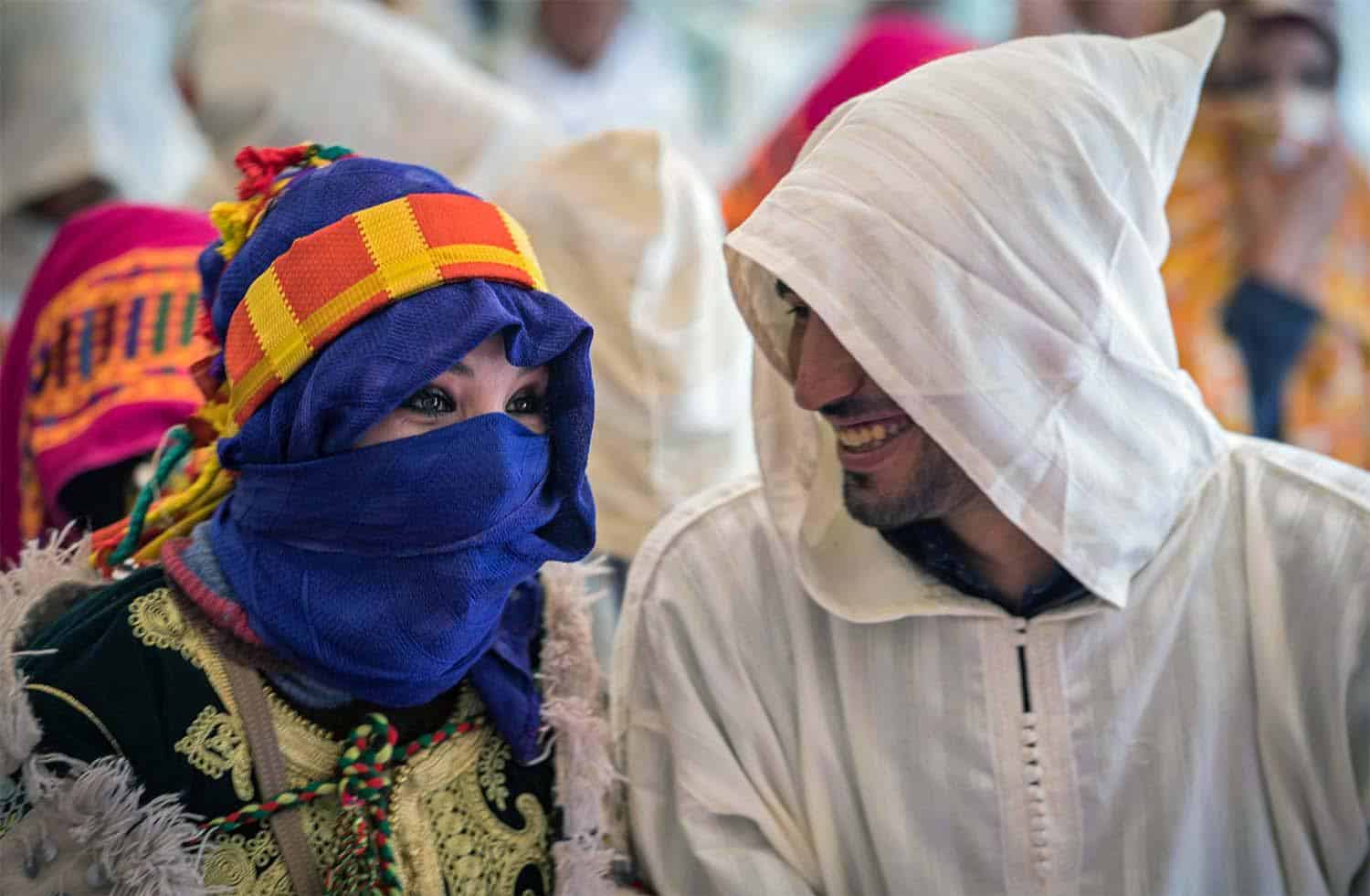
The annual Imilchil moussem is entering its expected September window, with several 2026 cultural calendars pointing to dates around September 18 to 20. The gathering, associated with the Aït Hadiddou of Morocco’s eastern High Atlas, remains one of the country’s most recognizable Amazigh cultural events, but recent cultural guides are also urging visitors to approach it with more care.
Imilchil is often marketed internationally as a “marriage festival,” a phrase that can flatten a complex community gathering into an easy tourist image. The official festival background and newer cultural guides describe a much broader event shaped by market exchange, harvest rhythms, shrine visitation, music, dance, family ties and traditions linked to engagement and marriage.
The Aït Hadiddou gathering is rooted in the highland social calendar. Families, traders, musicians and visitors converge in the Imilchil region after the summer season, and the event is linked to the legendary lakes Isli and Tislit. Ahidous, local crafts, livestock, traditional dress and community encounters all form part of the wider atmosphere.
Independent listings for 2026 suggest a September 18-20 window, but some guides caution that official annual confirmation can arrive late and that travelers should verify dates locally before making fixed plans. That uncertainty is common for seasonal moussems whose timing can depend on local decisions and agricultural calendars.
The more important issue is framing. Cultural writers have warned that reducing Imilchil to a staged “bride market” misrepresents local traditions and encourages intrusive tourism. Public ceremonies and social encounters do not mean that intimate family decisions exist for spectacle.
A more respectful reading places the moussem within Amazigh community life: a high-altitude market, a memory site, a social rendezvous and a cultural stage where Aït Hadiddou identity remains visible. For visitors, that means asking permission before close photography, respecting family spaces and understanding that the event belongs first to the community that sustains it.
For Amazigh culture observers, Imilchil is still important because it shows how local institutions adapt under tourism pressure while carrying older forms of memory and exchange. The challenge is to support visibility without turning a living gathering into a stereotype.