
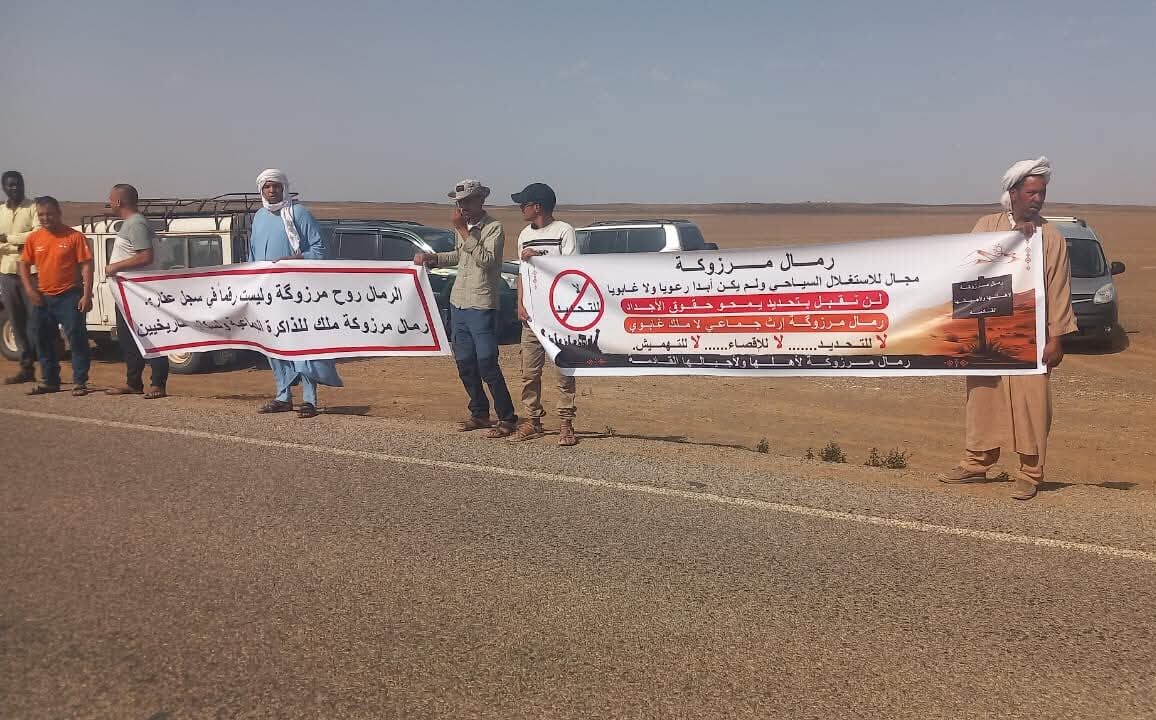
Merzouga, Morocco — Beneath the towering orange dunes of Erg Chebbi, where camel caravans and luxury desert camps have transformed one of Morocco’s most iconic landscapes into a global tourist destination, members of the Aït Khabbach Amazigh tribe are protesting what they say is an attempt to privatise their ancestral lands.
In recent days, Aït Khabbach tribe have taken to the streets of Merzouga, organising protests, sit-ins and vehicle convoys to oppose what they describe as an attempt to privatise land their community has collectively used and managed for generations.
At the centre of the dispute is land registration file No. 14.75961, a formal application within Morocco’s land registration system that residents say covers part of the Erg Chebbi dunes. The file is an application submitted through Morocco’s land registration system, which allows claimants to seek formal title over land following a period during which competing claims can be lodged. The application has become a flashpoint in a growing conflict over who has the right to own, govern and profit from one of the country’s most valuable desert landscapes.
As desert tourism has expanded, land around Erg Chebbi has become increasingly valuable, transforming a landscape once primarily used for grazing into a sought-after location for luxury camps, hotels and tourism businesses.
The demonstrations coincided with the arrival of technical officials tasked with advancing the registration process. Protesters responded by demanding an immediate suspension of the proceedings and calling for negotiations with state authorities to safeguard what they consider their ancestral collective lands.
“This is hogra. For years, the government has been trying to take the tribe’s land by any means possible,” said one Aït Khabbach protester. “They ignore our rights and only come when they see something they can profit from.”
A fight over the Sahara’s shifting sands
For many residents, the issue extends far beyond a single parcel of land.
At the heart of the dispute are two competing conceptions of land itself: one rooted in Morocco’s formal system of land registration, which privileges legally registered ownership, the other in Amazigh traditions of collective stewardship, customary tenure and long-standing relationships to ancestral territory.
For the Aït Khabbach, the dunes are not simply an economic resource, but a cultural landscape woven into generations of pastoral mobility, oral tradition and collective identity.
“This land has belonged to the Aït Khabbach for as long as anyone can remember,” said another resident. “It’s only now, when the government sees it as valuable, that they have come to try to take it from us. And what made this land valuable? The hard work of the Aït Khabbach—nothing else. When we were walking these dunes barefoot, where was the government then?”
The Erg Chebbi dunes have long been understood by the Aït Khabbach as collective tribal territory used for grazing, seasonal movement and shared community access under Amazigh customary tenure. Although these systems were rarely documented through modern cadastral registration, they formed the basis of land management for generations before the arrival of large-scale tourism and contemporary property markets.
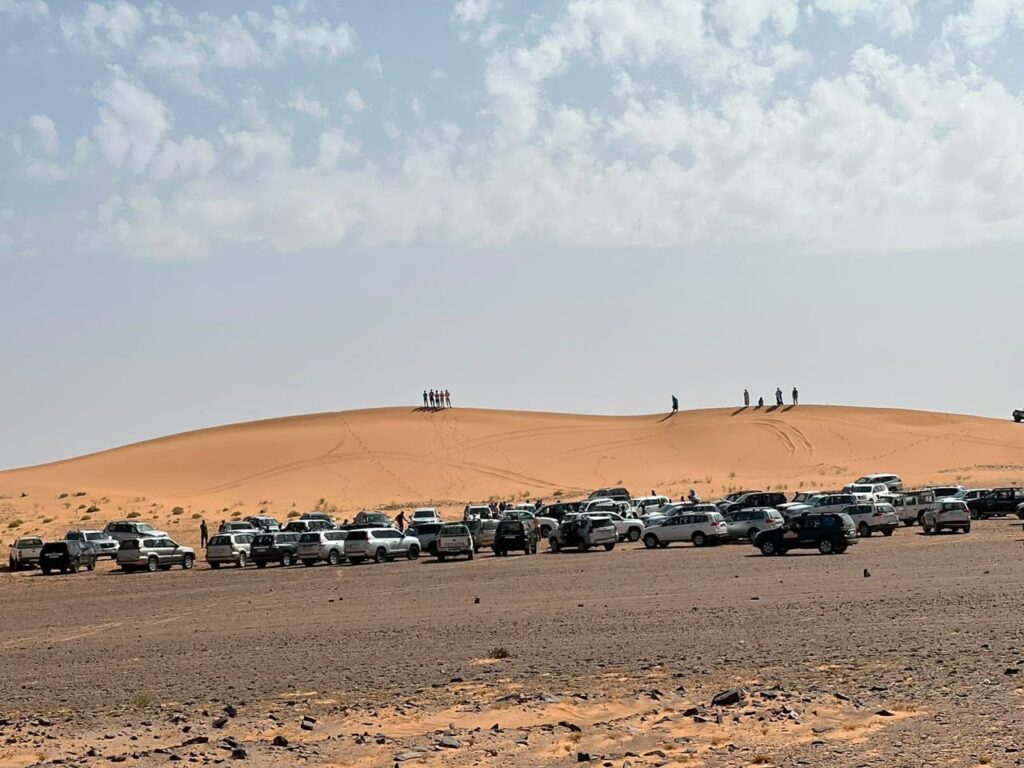
For generations, customary tenure did not simply determine who could use the dunes, but also how access, grazing rights and seasonal movement were negotiated within the community, embedding land management within broader systems of social responsibility and collective stewardship.
Community members argue that registering parts of the dunes as private property would undermine customary systems of collective stewardship that have shaped life in the region for generations.
Land, identity and Indigenous stewardship
The dispute echoes broader debates across North Africa over the recognition of Indigenous land rights.
The Amazigh are widely recognizes as the Indigenous peoples of North Africa, with communities stretching from Morocco to Egypt. For centuries, many Amazigh groups governed land through customary institutions that recognised collective stewardship, seasonal access and tribal responsibility rather than exclusive private ownership.
While Morocco has taken significant steps towards recognising Amazigh identity, including the constitutional recognition of Tamazight as an official language in 2011, Indigenous organisations have long argued that legal recognition has not always translated into effective protection of customary land rights.
International standards, including the United Nations Declaration on the Rights of Indigenous Peoples (UNDRIP), affirm that Indigenous peoples have rights to the lands, territories and resources they have traditionally owned, occupied or otherwise used, and call on states to consult Indigenous communities before adopting measures that affect those lands. Although UNDRIP is not legally binding, it has become an influential international framework for assessing Indigenous rights.
Although Morocco has not incorporated these principles directly into all aspects of domestic land law, community members argue that the Merzouga dispute reflects precisely the kind of conflict over traditional territories that UNDRIP seeks to address.
For residents of Merzouga, the current dispute reflects a broader concern that formal land registration may fail to recognise customary systems that have governed the dunes for generations.
Rather than a dispute over a single parcel of desert, Merzouga has become a microcosm of a wider question facing Indigenous communities worldwide: how can customary systems of governance survive when landscapes once valued for collective use become commercially valuable through tourism and investment?
From grazing land to tourism hotspot
The controversy also highlights the economic transformation of Morocco’s southeast.
Over the past two decades, Erg Chebbi has evolved from a largely pastoral landscape into one of Morocco’s premier tourism destinations. Luxury desert camps, hotels, camel trekking businesses, quad bike operators and other tourism ventures have dramatically increased the value of land once regarded primarily as communal grazing territory.
“We don’t know what will happen to the businesses we have built here,” one camp owner said. “People are saying we may have to pay the government rent just to keep our camps where they are. Tourism is our only source of income—if we lose that, what will we have left?”
As tourism has expanded, formal land registration has become increasingly significant. Areas that were historically managed through collective customary arrangements have become valuable commercial assets, intensifying competition over ownership and control.
For many residents, the question is not simply who owns the dunes, but who has the authority to determine their future.
Community representatives insist they are not opposed to tourism or development. Rather, they argue that development should proceed with the free participation of Indigenous communities and with recognition of longstanding collective rights that have sustained the landscape for generations.
“The government never gave us roads, electricity, schools or hospitals,” another protester said. “We built our lives here ourselves. Now they come, not to help us, but to take our land.”
Whose desert?
The dispute also reflects broader efforts by Moroccan authorities to formalise land ownership through the national land registration system. While supporters argue that registration provides greater legal certainty and encourages investment, critics say the process can struggle to accommodate customary systems of tenure that have historically governed collective lands across much of rural Morocco.
For the Aït Khabbach, the dispute is about far more than ownership. It is about whether centuries of Indigenous stewardship can endure in a landscape increasingly shaped by tourism, private investment and formal land registration. Whatever the outcome of File No. 14.75961, the case has become a test of how Morocco reconciles economic development with the protection of customary land rights—and a reminder that similar questions are confronting Indigenous communities far beyond the Sahara.