
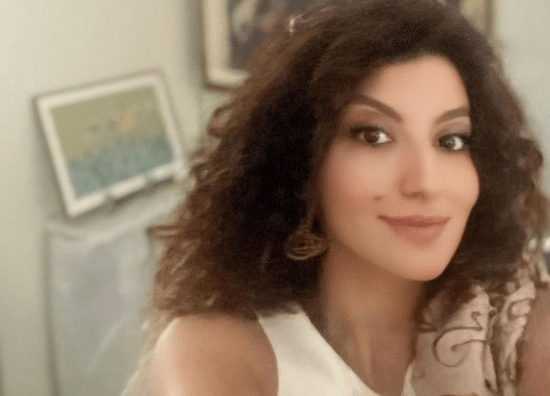
A new Kabyle.com interview with Fatma Gadhoumi places the Tunisian-born, France-based artist within a wider Tamazgha conversation about memory, vulnerability and the creative lives of North African women in the diaspora.
Gadhoumi works across painting and sculpture, moving between miniature-inspired visual worlds, clay, papier-mache, plaster and recovered materials. In the interview, she describes sculpture as a step that became necessary when paper could no longer hold the emotional charge of her work.
Her female figures are central, but not narrowly biographical. She presents them as wounded, suspended or fragile bodies that speak to vulnerability, resistance and interior freedom. The work carries personal themes, but it also invites broader readings about exile, health, memory and the search for wholeness.
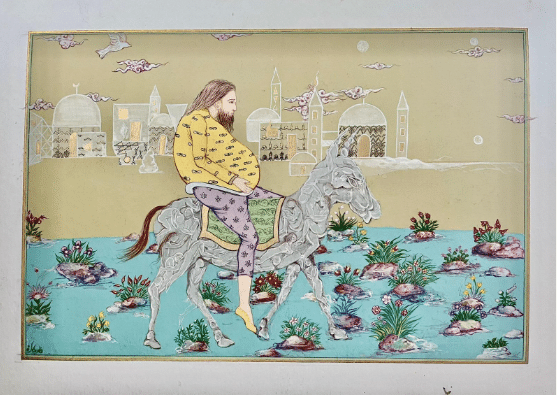
The interview also underlines the multiplicity of her formation. Gadhoumi’s life crosses Tunisia and France, engineering and art, science and imagination, Persian miniature and surrealism. Earlier writing on her work noted her participation in a Paris exhibition on Persian miniature at the Jardin du Luxembourg and described her path as one that joins scientific training with visual creation.
For Amazigh and broader North African cultural audiences, the interview is noteworthy because Kabyle.com frames her artistic voice within Tamazgha, a cultural space that reaches beyond strictly linguistic or national categories. That framing allows readers to see Tunisian, Kabyle, Moroccan and diaspora artistic experiences as part of a connected North African field.
Gadhoumi’s work does not present identity as a slogan. It appears instead through recurring images of fragility, bodies, memory and repair. In that sense, the interview adds to a growing archive of North African women artists whose work speaks across borders while remaining rooted in personal histories.
The profile is also a reminder that Amazigh and Tamazgha cultural coverage is not limited to language policy or political rights. It also includes the quieter labor of artists who transform private pain, inherited forms and diasporic lives into images that can travel between communities.